
大家好,又见面了,我是你们的朋友全栈君。
简介
join()是Thread类的一个方法。根据jdk文档的定义:
public final void join()throws InterruptedException: Waits for this thread to die.
join()方法的作用,是等待这个线程结束;但显然,这样的定义并不清晰。个人认为”Java 7 Concurrency Cookbook”的定义较为清晰:
join() method suspends the execution of the calling thread until the object called finishes its execution.
也就是说,t.join()方法阻塞调用此方法的线程(calling thread),直到线程t完成,此线程再继续;通常用于在main()主线程内,等待其它线程完成再结束main()主线程。我们来看看下面的例子。
例子
我们对比一下下面这两个例子,看看使用join()方法的作用是什么?
- 不使用
join()方法的情况:
public static void main(String[] args){
    System.out.println("MainThread run start.");

    //启动一个子线程
    Thread threadA = new Thread(new Runnable() {
        @Override
        public void run() {
            System.out.println("threadA run start.");
            try {
                Thread.sleep(1000);
            } catch (Exception e) {
                e.printStackTrace();
            }
            System.out.println("threadA run finished.");
        }
    });
    threadA.start();

    System.out.println("MainThread join before");
    System.out.println("MainThread run finished.");
}
运行结果如下:
MainThread run start.
threadA run start.
MainThread join before
MainThread run finished.
threadA run finished.
因为上述子线程执行时间相对较长,所以是在主线程执行完毕之后才结束。
- 使用了
join()方法的情况:
public static void main(String[] args){
    System.out.println("MainThread run start.");

    //启动一个子线程
    Thread threadA = new Thread(new Runnable() {
        @Override
        public void run() {
            System.out.println("threadA run start.");
            try {
                Thread.sleep(1000);
            } catch (Exception e) {
                e.printStackTrace();
            }
            System.out.println("threadA run finished.");
        }
    });
    threadA.start();

    System.out.println("MainThread join before");
    try {
        threadA.join();    //调用join()
    } catch (InterruptedException e) {
        e.printStackTrace();
    }
    System.out.println("MainThread run finished.");
}
运行结果如下:
MainThread run start.
threadA run start.
MainThread join before
threadA run finished.
MainThread run finished.
对子线程threadA使用了join()方法之后,我们发现主线程会等待子线程执行完成之后才往后执行。
join()的原理和作用
java层次的状态转换图
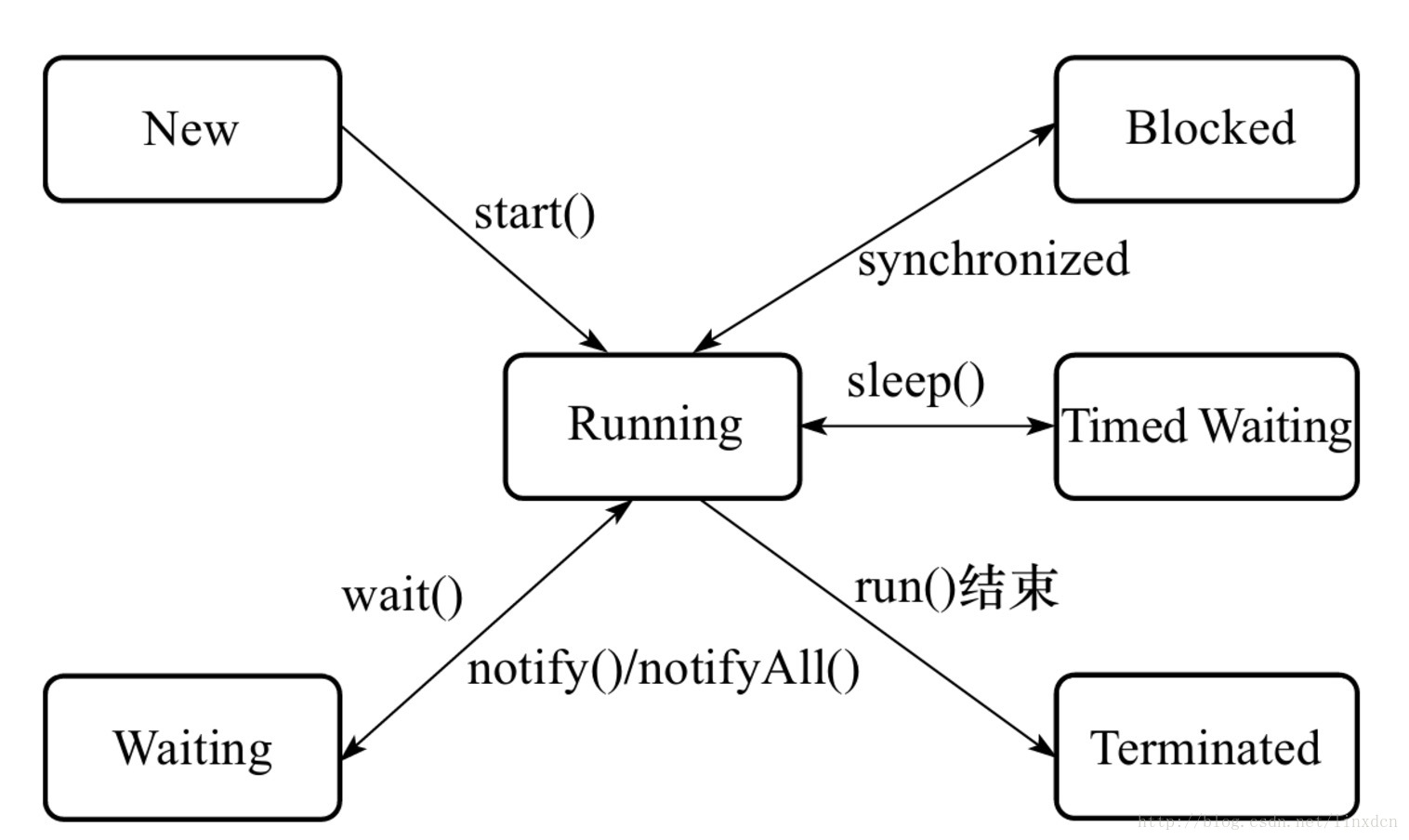

我们来深入源码了解一下join():
//Thread类中
public final void join() throws InterruptedException {
    join(0);
}


public final synchronized void join(long millis) throws InterruptedException {
    long base = System.currentTimeMillis();  //获取当前时间
    long now = 0;

    if (millis < 0) {
        throw new IllegalArgumentException("timeout value is negative");
    }

    if (millis == 0) {    //这个分支是无限期等待直到b线程结束
        while (isAlive()) {
            wait(0);
        }
    } else {    //这个分支是等待固定时间,如果b没结束,那么就不等待了。
        while (isAlive()) {
            long delay = millis - now;
            if (delay <= 0) {
                break;
            }
            wait(delay);
            now = System.currentTimeMillis() - base;
        }
    }
}
我们重点关注一下这两句,无限期等待的情况::
while (isAlive()) {
    wait(0);    //wait操作,那必然有synchronized与之对应
}注意这个wait()方法是Object类中的方法,再来看sychronized的是谁:
public final synchronized void join(long millis) throws InterruptedException { ... }成员方法加了synchronized说明是synchronized(this),this是谁啊?this就是threadA子线程对象本身。也就是说,主线程持有了threadA这个对象的锁。
大家都知道,有了wait(),必然有notify(),什么时候才会notify呢?在jvm源码里:
// 位于/hotspot/src/share/vm/runtime/thread.cpp中
void JavaThread::exit(bool destroy_vm, ExitType exit_type) {
    // ...

    // Notify waiters on thread object. This has to be done after exit() is called
    // on the thread (if the thread is the last thread in a daemon ThreadGroup the
    // group should have the destroyed bit set before waiters are notified).
    // 有一个贼不起眼的一行代码,就是这行
    ensure_join(this);

    // ...
}


static void ensure_join(JavaThread* thread) {
    // We do not need to grap the Threads_lock, since we are operating on ourself.
    Handle threadObj(thread, thread->threadObj());
    assert(threadObj.not_null(), "java thread object must exist");
    ObjectLocker lock(threadObj, thread);
    // Ignore pending exception (ThreadDeath), since we are exiting anyway
    thread->clear_pending_exception();
    // Thread is exiting. So set thread_status field in java.lang.Thread class to TERMINATED.
    java_lang_Thread::set_thread_status(threadObj(), java_lang_Thread::TERMINATED);
    // Clear the native thread instance - this makes isAlive return false and allows the join()
    // to complete once we've done the notify_all below
    java_lang_Thread::set_thread(threadObj(), NULL);

    // 同志们看到了没,别的不用看,就看这一句
    // thread就是当前线程,是啥?就是刚才例子中说的threadA线程啊。
    lock.notify_all(thread);

    // Ignore pending exception (ThreadDeath), since we are exiting anyway
    thread->clear_pending_exception();
}
当子线程threadA执行完毕的时候,jvm会自动唤醒阻塞在threadA对象上的线程,在我们的例子中也就是主线程。至此,threadA线程对象被notifyall了,那么主线程也就能继续跑下去了。
可以看出,join()方法实现是通过wait()(小提示:Object 提供的方法)。 当main线程调用threadA.join时候,main线程会获得线程对象threadA的锁(wait 意味着拿到该对象的锁),调用该对象的wait(等待时间),直到该对象唤醒main线程 (也就是子线程threadA执行完毕退出的时候)
总结
首先join() 是一个synchronized方法, 里面调用了wait(),这个过程的目的是让持有这个同步锁的线程进入等待,那么谁持有了这个同步锁呢?答案是主线程,因为主线程调用了threadA.join()方法,相当于在threadA.join()代码这块写了一个同步代码块,谁去执行了这段代码呢,是主线程,所以主线程被wait()了。然后在子线程threadA执行完毕之后,JVM会调用lock.notify_all(thread);唤醒持有threadA这个对象锁的线程,也就是主线程,会继续执行。
参考资料
发布者:全栈程序员-站长,转载请注明出处:https://javaforall.net/140802.html原文链接:https://javaforall.net



