
MessageAuthentication Code(MAC)是一种保障信息完整性和认证的密码学方法,其中CMAC的全称是Cypher-Based
Message Authentication Code,基于AES等对称加密方式实现消息认证。通信双方需要共享一个对称密钥,由发送方生成一个MAC值,附在消息后面,接收方计算收到消息的MAC,如果和收到的MAC一致,则说明没有被篡改,并且能确认发送方一定拥有相同的密钥,即认证身份。
美国国家标准与技术研究院NIST推荐了一种CMAC计算方式,可以避免CBC-MAC带来的缺点,编号为800-3B,文档可以从其官网上下载。该算法通过MAC密钥生成k1和k2两个子密钥,并规定了数据位填充的规则,可以通过AES-128、AES-192、AES-256三种模式进行MAC计算,支持所有整数字节的数据以及长度为0的输入。下图为MAC算法处理不需要位填充和需要位填充的两种情况。本文介绍AES-128生成的CMAC实现。
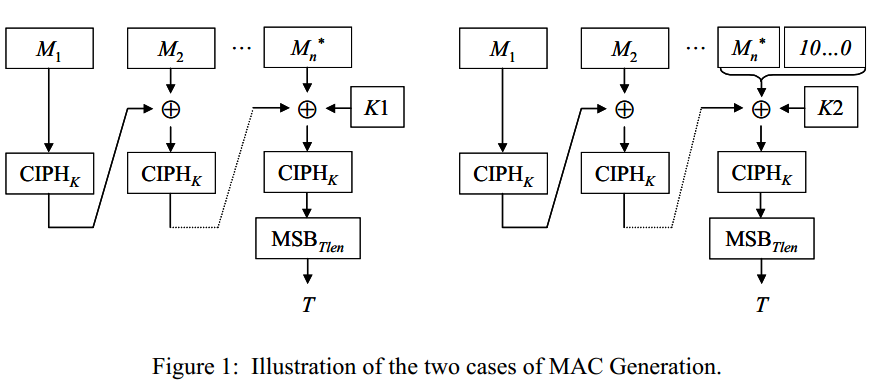

本C代码外部依赖项是mbedTLS的密码学库,下载及使用见《C语言实现AES加密解密》。
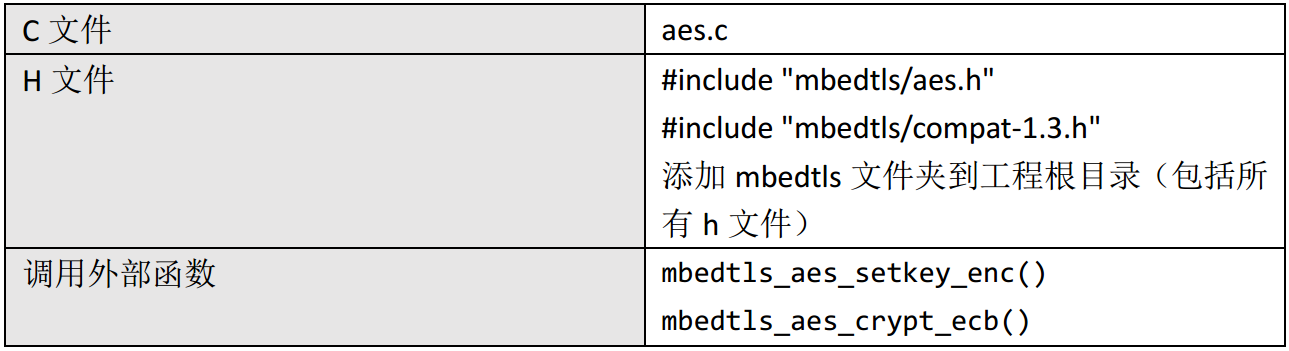
表1外部调用列表
本CMAC算法包括的内部函数如下。
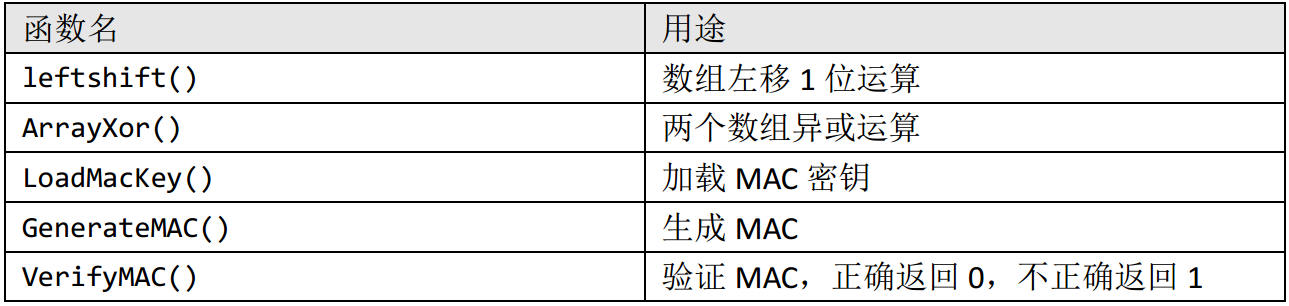
表2本代码中设计的函数
本CMAC算法包括的全局变量如下。

表3本代码中的全局变量
CMAC实现部分代码如下:
#include
#include “mbedtls/aes.h”
#include “mbedtls/compat-1.3.h”
uint8_t MAC[16];
uint8_t MACkey[16];
uint8_t k1[16];
uint8_t k2[16];
mbedtls_aes_context aes;
void leftshift(int len, uint8_t* add, uint8_t*des)
{
int i;
for (i = 0; i < len - 1; i++)
{
des[i] = (add[i] << 1) + (add[i + 1] >= 0x80?1:0);
}
des[len – 1] = add[len – 1] << 1;
}
void ArrayXor(int len, uint8_t*a1, uint8_t*a2, uint8_t*des)
{
int i;
for (i = 0; i < len; i++)
{
des[i] = a1[i] ^ a2[i];
}
}
void LoadMacKey(uint8_t *key)
{
int i;
uint8_t plain[16] = { 0x00, 0x00, 0x00, 0x00, 0x00, 0x00, 0x00, 0x00, 0x00, 0x00, 0x00, 0x00, 0x00, 0x00, 0x00, 0x00};
uint8_t Rb[16] = { 0x00, 0x00, 0x00, 0x00, 0x00, 0x00, 0x00, 0x00, 0x00, 0x00, 0x00, 0x00, 0x00, 0x00, 0x00, 0x87 };
uint8_t c0[16];
for (i = 0; i < 16; i++)
{
MACkey[i] = key[i]; // set MAC key
}
mbedtls_aes_setkey_enc(&aes, MACkey, 128);
mbedtls_aes_crypt_ecb(&aes, AES_ENCRYPT, plain, c0);
if (c0[0]<0x80) //generate k1
{
leftshift(16, c0, k1);
}
else
{
leftshift(16, c0, k1);
ArrayXor(16, k1, Rb, k1);
}
if (k1[0] < 0x80) //generate k2
{
leftshift(16, k1, k2);
}
else
{
leftshift(16, k1, k2);
ArrayXor(16, k2, Rb, k2);
}
}
void GenerateMAC(int len, uint8_t *add, uint8_t *macvalue)
{
int i,block;
uint8_t IVtemp[16] = { 0, 0, 0, 0, 0, 0, 0, 0, 0, 0, 0, 0, 0, 0, 0, 0};
uint8_t Blocktemp[16] = { 0, 0, 0, 0, 0, 0, 0, 0, 0, 0, 0, 0, 0, 0, 0, 0 };
if (len % 16 == 0 && len!=0)
{
mbedtls_aes_setkey_enc(&aes, MACkey, 128);// load mac key
block = len / 16;
for (i = 0; i < block-1; i++)
{
ArrayXor(16, &add[i * 16], IVtemp, Blocktemp);
mbedtls_aes_crypt_ecb(&aes, AES_ENCRYPT, Blocktemp, IVtemp);
}
ArrayXor(16, &add[(block-1)*16], IVtemp, Blocktemp);
ArrayXor(16, Blocktemp, k1, Blocktemp);
mbedtls_aes_crypt_ecb(&aes, AES_ENCRYPT, Blocktemp, macvalue);
}
else
{
if (len==0)
{
mbedtls_aes_setkey_enc(&aes, MACkey, 128);// load mac key
block = 1;
Blocktemp[0] = 0x80;//padding the first bit with 1
ArrayXor(16, Blocktemp, k2, Blocktemp);
mbedtls_aes_crypt_ecb(&aes, AES_ENCRYPT, Blocktemp, macvalue);
}
else
{
mbedtls_aes_setkey_enc(&aes, MACkey, 128);// load mac key
uint8_t remain = len % 16;
block = len / 16 + 1;
for (i = 0; i < block - 1; i++)
{
ArrayXor(16, &add[i * 16], IVtemp, Blocktemp);
mbedtls_aes_crypt_ecb(&aes, AES_ENCRYPT, Blocktemp, IVtemp);
}
// the last block padding
for (i = 0; i < remain; i++)
{
Blocktemp[i] = add[(block – 1) * 16 + i];
}
Blocktemp[remain] = 0x80;
for (i = remain + 1; i < 16; i++)
{
Blocktemp[i] = 0;
}
// end of the last block padding
ArrayXor(16, Blocktemp, k2, Blocktemp);
ArrayXor(16, Blocktemp, IVtemp, Blocktemp);
mbedtls_aes_crypt_ecb(&aes, AES_ENCRYPT, Blocktemp, macvalue);
}
}
}
uint8_t VerifyMAC(int len, uint8_t *add, uint8_t *macvalue1)
{
int i, block;
uint8_t IVtemp[16] = { 0, 0, 0, 0, 0, 0, 0, 0, 0, 0, 0, 0, 0, 0, 0, 0 };
uint8_t Blocktemp[16] = { 0, 0, 0, 0, 0, 0, 0, 0, 0, 0, 0, 0, 0, 0, 0, 0 };
uint8_t macvalue[16];
uint8_t result=1;
if (len % 16 == 0 && len != 0)
{
mbedtls_aes_setkey_enc(&aes, MACkey, 128);// load mac key
block = len / 16;
for (i = 0; i < block - 1; i++)
{
ArrayXor(16, &add[i * 16], IVtemp, Blocktemp);
mbedtls_aes_crypt_ecb(&aes, AES_ENCRYPT, Blocktemp, IVtemp);
}
ArrayXor(16, &add[(block – 1) * 16], IVtemp, Blocktemp);
ArrayXor(16, Blocktemp, k1, Blocktemp);
mbedtls_aes_crypt_ecb(&aes, AES_ENCRYPT, Blocktemp, macvalue);
}
else
{
if (len == 0)
{
mbedtls_aes_setkey_enc(&aes, MACkey, 128);// load mac key
block = 1;
Blocktemp[0] = 0x80;//padding the first bit with 1
ArrayXor(16, Blocktemp, k2, Blocktemp);
mbedtls_aes_crypt_ecb(&aes, AES_ENCRYPT, Blocktemp, macvalue);
}
else
{
mbedtls_aes_setkey_enc(&aes, MACkey, 128);// load mac key
uint8_t remain = len % 16;
block = len / 16 + 1;
for (i = 0; i < block - 1; i++)
{
ArrayXor(16, &add[i * 16], IVtemp, Blocktemp);
mbedtls_aes_crypt_ecb(&aes, AES_ENCRYPT, Blocktemp, IVtemp);
}
// the last block padding
for (i = 0; i < remain; i++)
{
Blocktemp[i] = add[(block – 1) * 16 + i];
}
Blocktemp[remain] = 0x80;
for (i = remain + 1; i < 16; i++)
{
Blocktemp[i] = 0;
}
// end of the last block padding
ArrayXor(16, Blocktemp, k2, Blocktemp);
ArrayXor(16, Blocktemp, IVtemp, Blocktemp);
mbedtls_aes_crypt_ecb(&aes, AES_ENCRYPT, Blocktemp, macvalue);
}
}
result = 1;
for (i = 0; i < 16; i++)
{
if (macvalue[i] != macvalue1[i])
{
return(result);
}
}
result = 0;
return(result);
}
Main函数部分代码如下:
int main(){
uint8_t data[64] = { 0x6b, 0xc1, 0xbe, 0xe2, 0x2e, 0x40, 0x9f, 0x96, 0xe9, 0x3d, 0x7e, 0x11, 0x73, 0x93, 0x17, 0x2a,
0xae, 0x2d, 0x8a, 0x57, 0x1e, 0x03, 0xac, 0x9c, 0x9e, 0xb7, 0x6f, 0xac, 0x45, 0xaf, 0x8e, 0x51,
0x30, 0xc8, 0x1c, 0x46, 0xa3, 0x5c, 0xe4, 0x11, 0xe5, 0xfb, 0xc1, 0x19, 0x1a, 0x0a, 0x52, 0xef,
0xf6, 0x9f, 0x24, 0x45, 0xdf, 0x4f, 0x9b, 0x17, 0xad, 0x2b, 0x41, 0x7b, 0xe6, 0x6c, 0x37, 0x10 };
uint8_t tf=2;
uint8_t tk[16] = { 0x2b, 0x7e, 0x15, 0x16, 0x28, 0xae, 0xd2, 0xa6, 0xab, 0xf7, 0x15, 0x88, 0x09, 0xcf, 0x4f, 0x3c };
LoadMacKey(tk);//加载MAC key
GenerateMAC(33, data, MAC);// 数据字节长度,数据地址,MAC地址
tf=VerifyMAC(33, data, MAC); // 数据字节长度,数据地址,MAC地址
}
发布者:全栈程序员-站长,转载请注明出处:https://javaforall.net/221708.html原文链接:https://javaforall.net




