
1.拷贝的引入
(1)引用拷贝
创建一个指向对象的引用变量的拷贝。
例1:
Teacher teacher = new Teacher("Taylor",26);
Teacher otherteacher = teacher;
System.out.println(teacher);
System.out.println(otherteacher);
输出结果:
blog.Teacher@355da254
blog.Teacher@355da254
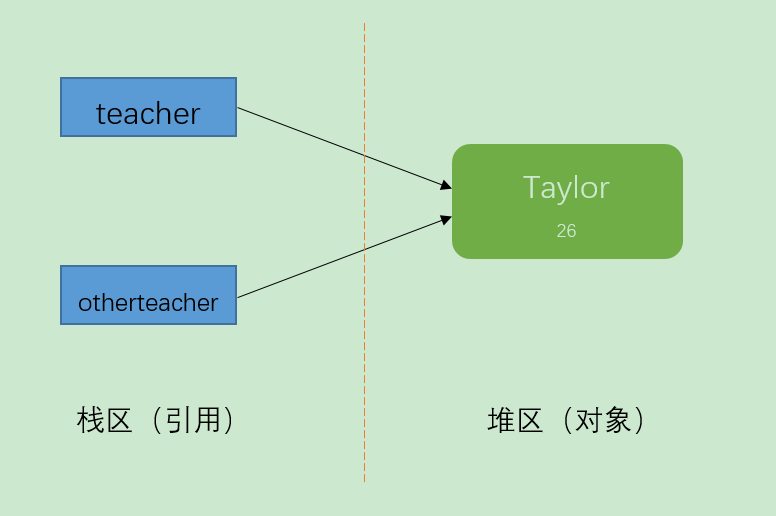
结果分析:由输出结果可以看出,它们的地址值是相同的,那么它们肯定是同一个对象。teacher和otherteacher的只是引用而已,他们都指向了一个相同的对象Teacher(“Taylor”,26)。 这就叫做引用拷贝。
例1 图解:

(2)对象拷贝
创建对象本身的一个副本。
例2:
Teacher teacher = new Teacher("Swift",26);
Teacher otherteacher = (Teacher)teacher.clone();
System.out.println(teacher);
System.out.println(otherteacher);
输出结果:
blog.Teacher@355da254
blog.Teacher@4dc63996
结果分析:由输出结果可以看出,它们的地址是不同的,也就是说创建了新的对象, 而不是把原对象的地址赋给了一个新的引用变量,这就叫做对象拷贝。
例2 图解:

注:深拷贝和浅拷贝都是对象拷贝
2.浅拷贝
(1)定义:
被复制对象的所有变量都含有与原来的对象相同的值,而所有的对其他对象的引用仍然指向原来的对象。即对象的浅拷贝会对“主”对象进行拷贝,但不会复制主对象里面的对象。”里面的对象“会在原来的对象和它的副本之间共享。
简而言之,浅拷贝仅仅复制所考虑的对象,而不复制它所引用的对象
(2)浅拷贝实例:
例3:
public class ShallowCopy {

    public static void main(String[] args) throws CloneNotSupportedException {

        Teacher teacher = new Teacher();
        teacher.setName("Delacey");
        teacher.setAge(29);

        Student2 student1 = new Student2();
        student1.setName("Dream");
        student1.setAge(18);
        student1.setTeacher(teacher);

        Student2 student2 = (Student2) student1.clone();
        System.out.println("拷贝后");
        System.out.println(student2.getName());
        System.out.println(student2.getAge());
        System.out.println(student2.getTeacher().getName());
        System.out.println(student2.getTeacher().getAge());
        System.out.println("修改老师的信息后-------------");

        // 修改老师的信息
        teacher.setName("Jam");
        System.out.println(student1.getTeacher().getName());
        System.out.println(student2.getTeacher().getName());
    }

}

class Teacher implements Cloneable {

    private String name;
    private int age;

    public String getName() {

        return name;
    }

    public void setName(String name) {

        this.name = name;
    }

    public int getAge() {

        return age;
    }

    public void setAge(int age) {

        this.age = age;
    }
}

class Student2 implements Cloneable{

    private String name;
    private int age;
    private Teacher teacher;

    public String getName() {

        return name;
    }

    public void setName(String name) {

        this.name = name;
    }

    public int getAge() {

        return age;
    }

    public void setAge(int age) {

        this.age = age;
    }

    public Teacher getTeacher() {

        return teacher;
    }

    public void setTeacher(Teacher teacher) {

        this.teacher = teacher;
    }

    @Override
    public Object clone() throws CloneNotSupportedException {

        Object object = super.clone();
        return object;
    }

}
输出结果:
拷贝后
Dream
18
Delacey
29
修改老师的信息后-------------
Jam
Jam
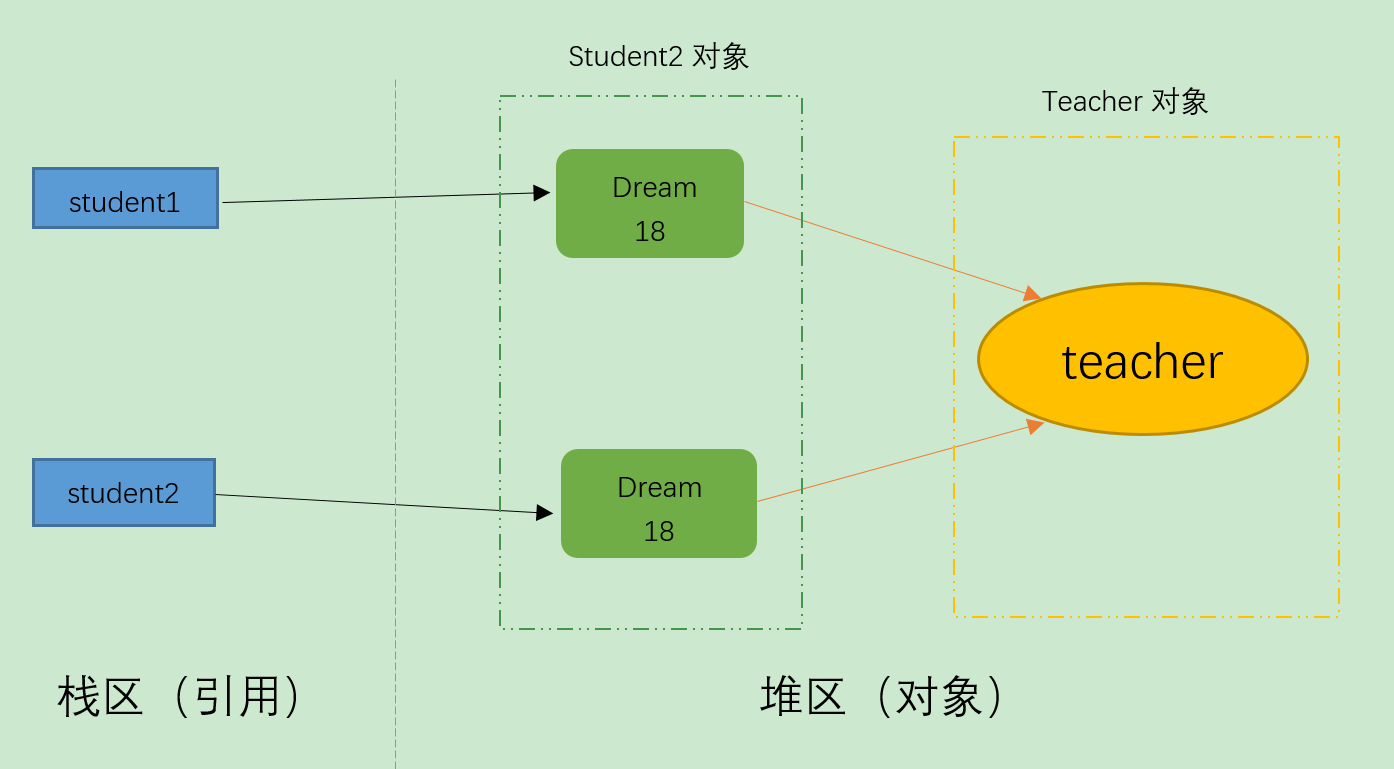
结果分析: 两个引用student1和student2指向不同的两个对象,但是两个引用student1和student2中的两个teacher引用指向的是同一个对象,所以说明是浅拷贝。
例3 图解:
3.深拷贝
(1)定义:
深拷贝是一个整个独立的对象拷贝,深拷贝会拷贝所有的属性,并拷贝属性指向的动态分配的内存。当对象和它所引用的对象一起拷贝时即发生深拷贝。深拷贝相比于浅拷贝速度较慢并且花销较大。
简而言之,深拷贝把要复制的对象所引用的对象都复制了一遍。
(2)实现深拷贝(实例1):
例4:
public class DeepCopy {

    public static void main(String[] args) throws Exception {

        Teacher2 teacher = new Teacher2();
        teacher.setName("Delacey");
        teacher.setAge(29);

        Student3 student1 = new Student3();
        student1.setName("Dream");
        student1.setAge(18);
        student1.setTeacher(teacher);

        Student3 student2 = (Student3) student1.clone();
        System.out.println("拷贝后");
        System.out.println(student2.getName());
        System.out.println(student2.getAge());
        System.out.println(student2.getTeacher().getName());
        System.out.println(student2.getTeacher().getAge());
        System.out.println("修改老师的信息后-------------");

        // 修改老师的信息
        teacher.setName("Jam");
        System.out.println(student1.getTeacher().getName());
        System.out.println(student2.getTeacher().getName());
    }
}

class Teacher2 implements Cloneable {

    private String name;
    private int age;

    public String getName() {

        return name;
    }

    public void setName(String name) {

        this.name = name;
    }

    public int getAge() {

        return age;
    }

    public void setAge(int age) {

        this.age = age;
    }

    @Override
    public Object clone() throws CloneNotSupportedException {

        return super.clone();
    }

}

class Student3 implements Cloneable {

    private String name;
    private int age;
    private Teacher2 teacher;

    public String getName() {

        return name;
    }

    public void setName(String name) {

        this.name = name;
    }

    public int getAge() {

        return age;
    }

    public void setAge(int age) {

        this.age = age;
    }

    public Teacher2 getTeacher() {

        return teacher;
    }

    public void setTeacher(Teacher2 teacher) {

        this.teacher = teacher;
    }

    @Override
    public Object clone() throws CloneNotSupportedException {

        // 浅复制时:
        // Object object = super.clone();
        // return object;

        // 改为深复制:
        Student3 student = (Student3) super.clone();
        // 本来是浅复制,现在将Teacher对象复制一份并重新set进来
        student.setTeacher((Teacher2) student.getTeacher().clone());
        return student;
    }

}
输出结果:
拷贝后
Dream
18
Delacey
29
修改老师的信息后-------------
Jam
Delacey
结果分析:
两个引用student1和student2指向不同的两个对象,两个引用student1和student2中的两个teacher引用指向的是两个对象,但对teacher对象的修改只能影响student1对象,所以说是深拷贝。
例4 图解1(teacher姓名Delacey更改前):

例4 图解2(teacher姓名Jam更改后):

(3)利用序列化实现深拷贝(实例2)
例5:
public class DeepCopyServiable {

    public static void main(String[] args) throws Exception {

        Teacher3 t = new Teacher3();
        t.setName("Taylor");
        t.setAge(28);

        Student3 s1 = new Student3();
        s1.setAge(20);
        s1.setName("blank space");
        s1.setTeacher(t);

        Student3 s2 = (Student3) s1.deepClone();

        System.out.println("拷贝后:");
        System.out.println(s2.getName());
        System.out.println(s2.getAge());
        System.out.println(s2.getTeacher().getName());
        System.out.println(s2.getTeacher().getAge());
        System.out.println("---------------------------");

        t.setName("swift");

        System.out.println("修改后:");
        System.out.println(s1.getTeacher().getName());
        System.out.println(s2.getTeacher().getName());
    }
}

class Teacher3 implements Serializable {

    private String name;
    private int age;

    public String getName() {

        return name;
    }

    public void setName(String name) {

        this.name = name;
    }

    public int getAge() {

        return age;
    }

    public void setAge(int age) {

        this.age = age;
    }

}

class Student3 implements Serializable {

    private String name;
    private int age;
    private Teacher3 teacher;

    public String getName() {

        return name;
    }

    public void setName(String name) {

        this.name = name;
    }

    public int getAge() {

        return age;
    }

    public void setAge(int age) {

        this.age = age;
    }

    public Teacher3 getTeacher() {

        return teacher;
    }

    public void setTeacher(Teacher3 teacher) {

        this.teacher = teacher;
    }

    public Object deepClone() throws Exception {

        // 序列化
        ByteArrayOutputStream bos = new ByteArrayOutputStream();
        ObjectOutputStream oos = new ObjectOutputStream(bos);

        oos.writeObject(this);

        // 反序列化
        ByteArrayInputStream bis = new ByteArrayInputStream(bos.toByteArray());
        ObjectInputStream ois = new ObjectInputStream(bis);

        return ois.readObject();
    }
}
输出结果:
拷贝后:
blank space
20
Taylor
28
---------------------------
修改后:
swift
Taylor
结果分析:说明用序列化的方式实现了对象的深拷贝
发布者:全栈程序员-站长,转载请注明出处:https://javaforall.net/234284.html原文链接:https://javaforall.net