
This lesson provides a comprehensive overview of Agentic Retrieval-Augmented Generation (Agentic RAG), an emerging AI paradigm where large language models (LLMs) autonomously plan their next steps while pulling information from external sources. Unlike static retrieval-then-read patterns, Agentic RAG involves iterative calls to the LLM, interspersed with tool or function calls and structured outputs. The system evaluates results, refines queries, invokes additional tools if needed, and continues this cycle until a satisfactory solution is achieved.
This lesson will cover
本课程将涵盖以下内容:
- Understand Agentic RAG: Learn about the emerging paradigm in AI where large language models (LLMs) autonomously plan their next steps while pulling information from external data sources.
理解 Agentic RAG:了解人工智能领域的新兴范式,即大语言模型(LLM)在从外部数据源提取信息时,能够自主规划下一步行动。
- Grasp Iterative Maker-Checker Style: Comprehend the loop of iterative calls to the LLM, interspersed with tool or function calls and structured outputs, designed to improve correctness and handle malformed queries.
掌握迭代式的“制作者-检查者”风格:理解 LLM 的迭代调用循环,其间穿插工具或函数调用及结构化输出,旨在提高准确性并处理格式错误的查询。
- Explore Practical Applications: Identify scenarios where Agentic RAG shines, such as correctness-first environments, complex database interactions, and extended workflows.
探索实际应用场景:识别 Agentic RAG 大放异彩的场景,例如以准确性为首要目标的环境、复杂的数据库交互以及延伸的工作流程。
After completing this lesson, you will know how to/understand:
完成本课程后,您将能够理解或掌握以下内容:
- Understanding Agentic RAG: Learn about the emerging paradigm in AI where large language models (LLMs) autonomously plan their next steps while pulling information from external data sources.
理解 Agentic RAG:了解人工智能领域的新兴范式,即大语言模型(LLM)在从外部数据源提取信息时,能够自主规划下一步行动。
- Iterative Maker-Checker Style: Grasp the concept of a loop of iterative calls to the LLM, interspersed with tool or function calls and structured outputs, designed to improve correctness and handle malformed queries.
迭代式的“制作者-检查者”风格:掌握 LLM 迭代调用循环的概念,其间穿插工具或函数调用及结构化输出,旨在提高准确性并处理格式错误的查询。
- Owning the Reasoning Process: Comprehend the system’s ability to own its reasoning process, making decisions on how to approach problems without relying on pre-defined paths.
掌控推理过程:理解系统掌控自身推理过程的能力,能够自主决定如何解决问题,而不依赖于预定义的路径。
- Workflow: Understand how an agentic model independently decides to retrieve market trend reports, identify competitor data, correlate internal sales metrics, synthesize findings, and evaluate the strategy.
工作流程:理解智能体模型如何独立决定检索市场趋势报告、识别竞争对手数据、关联内部销售指标、综合分析结果并评估策略。
- Iterative Loops, Tool Integration, and Memory: Learn about the system’s reliance on a looped interaction pattern, maintaining state and memory across steps to avoid repetitive loops and make informed decisions.
迭代循环、工具集成与记忆:了解系统对循环交互模式的依赖,能够在步骤之间保持状态和记忆,避免重复循环并做出明智决策。
- Handling Failure Modes and Self-Correction: Explore the system’s robust self-correction mechanisms, including iterating and re-querying, using diagnostic tools, and falling back on human oversight.
处理故障模式与自我纠错:探索系统的强大自我纠错机制,包括迭代与重新查询、使用诊断工具以及在必要时退回到人工监督。
- Boundaries of Agency: Understand the limitations of Agentic RAG, focusing on domain-specific autonomy, infrastructure dependence, and respect for guardrails.
智能体的边界:理解 Agentic RAG 的局限性,重点关注特定领域的自主性、对基础设施的依赖以及对安全限制的遵守。
- Practical Use Cases and Value: Identify scenarios where Agentic RAG shines, such as correctness-first environments, complex database interactions, and extended workflows.
实际用例与价值:识别 Agentic RAG 适用的场景,例如以准确性为首要目标的环境、复杂的数据库交互以及延伸的工作流程。
- Governance, Transparency, and Trust: Learn about the importance of governance and transparency, including explainable reasoning, bias control, and human oversight.
治理、透明度与信任:了解治理与透明度的重要性,包括可解释的推理、偏差控制以及人工监督。
Agentic Retrieval-Augmented Generation (Agentic RAG) is an emerging AI paradigm where large language models (LLMs) autonomously plan their next steps while pulling information from external sources. Unlike static retrieval-then-read patterns, Agentic RAG involves iterative calls to the LLM, interspersed with tool or function calls and structured outputs. The system evaluates results, refines queries, invokes additional tools if needed, and continues this cycle until a satisfactory solution is achieved. This iterative “maker-checker” style improves correctness, handles malformed queries, and ensures high-quality results.
与静态的“先检索后阅读”模式不同,Agentic RAG 涉及对 LLM 的迭代调用,其间穿插着工具或函数调用以及结构化输出。系统会评估结果、优化查询、根据需要调用额外工具,并持续循环,直至获得满意的解决方案。这种迭代式的“制作者-检查者”风格提高了准确性,处理了格式错误的查询,并确保了高质量的结果。
The system actively owns its reasoning process, rewriting failed queries, choosing different retrieval methods, and integrating multiple tools—such as vector search in Azure AI Search, SQL databases, or custom APIs—before finalizing its answer. The distinguishing quality of an agentic system is its ability to own its reasoning process. Traditional RAG implementations rely on pre-defined paths, but an agentic system autonomously determines the sequence of steps based on the quality of the information it finds.
Agentic Retrieval-Augmented Generation (Agentic RAG) is an emerging paradigm in AI development where LLMs not only pull information from external data sources but also autonomously plan their next steps. Unlike static retrieval-then-read patterns or carefully scripted prompt sequences, Agentic RAG involves a loop of iterative calls to the LLM, interspersed with tool or function calls and structured outputs. At every turn, the system evaluates the results it has obtained, decides whether to refine its queries, invokes additional tools if needed, and continues this cycle until it achieves a satisfactory solution.
Agentic RAG 是人工智能开发领域的一个新兴范式,在此范式中,LLM 不仅从外部数据源提取信息,还能自主规划下一步行动。与静态的“先检索后阅读”模式或精心编排的提示序列不同,Agentic RAG 涉及一个 LLM 的迭代调用循环,其间穿插着工具或函数调用以及结构化输出。在每一步,系统都会评估已获得的结果,决定是否优化查询,根据需要调用额外工具,并持续循环,直至获得满意的解决方案。
This iterative “maker-checker” style of operation is designed to improve correctness, handle malformed queries to structured databases (e.g. NL2SQL), and ensure balanced, high-quality results. Rather than relying solely on carefully engineered prompt chains, the system actively owns its reasoning process. It can rewrite queries that fail, choose different retrieval methods, and integrate multiple tools—such as vector search in Azure AI Search, SQL databases, or custom APIs—before finalizing its answer. This removes the need for overly complex orchestration frameworks. Instead, a relatively simple loop of “LLM call → tool use → LLM call → …” can yield sophisticated and well-grounded outputs.
这种迭代式的“制作者-检查者”操作风格旨在提高准确性、处理针对结构化数据库的格式错误查询(例如 NL2SQL),并确保结果平衡且高质量。智能体系统不仅仅依赖精心设计的提示链,而是积极掌控其推理过程。它可以重写失败的查询、选择不同的检索方法,并在最终确定答案之前集成多种工具(例如 Azure AI Search 中的向量搜索、SQL 数据库或自定义 API)。这消除了对过于复杂的编排框架的需求。相反,一个相对简单的“LLM 调用 → 工具使用 → LLM 调用 → …”循环即可产生复杂且有据可依的输出。
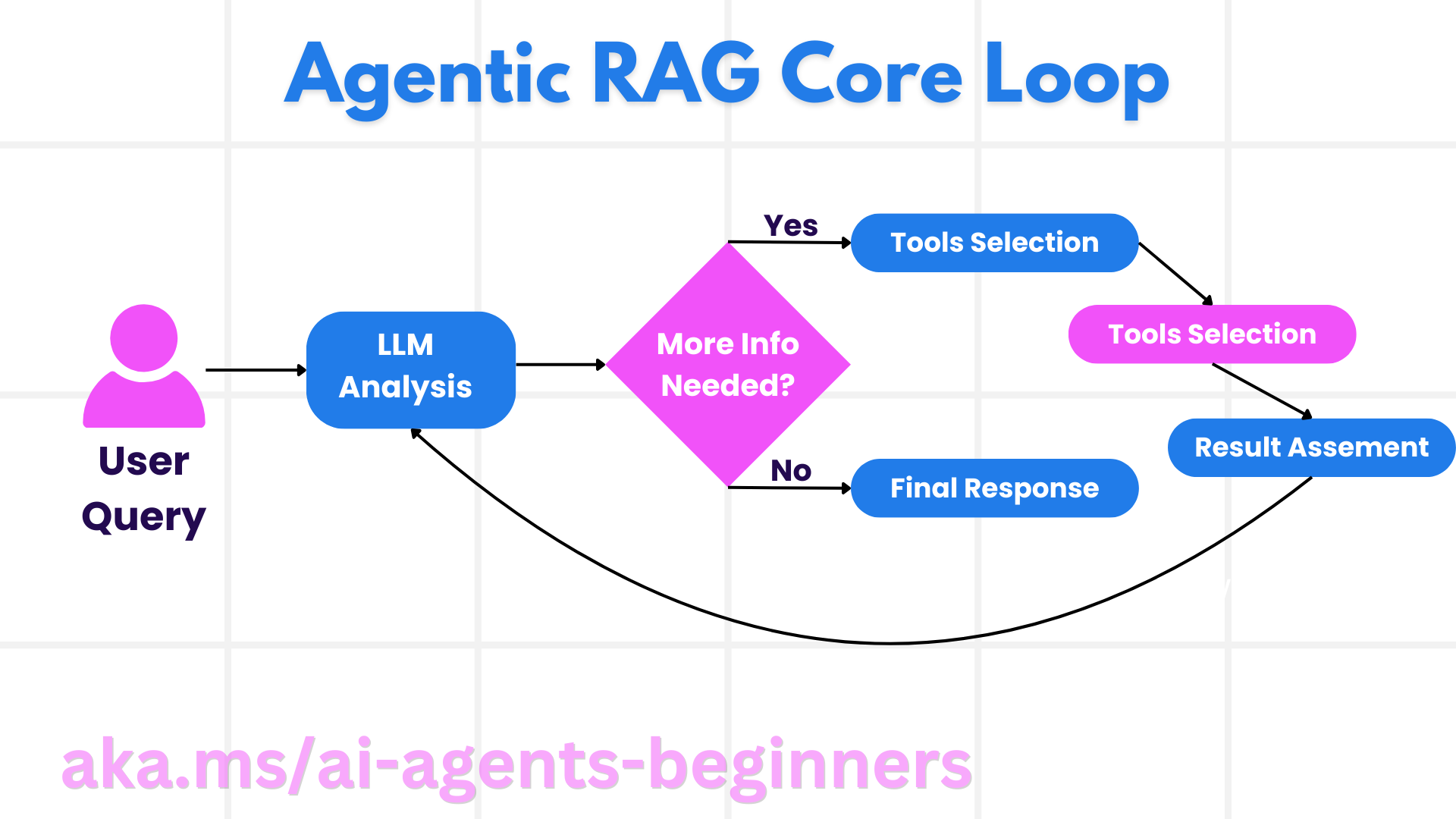


The distinguishing quality that makes a system “agentic” is its ability to own its reasoning process. Traditional RAG implementations often depend on humans pre-defining a path for the model: a chain-of-thought that outlines what to retrieve and when. But when a system is truly agentic, it internally decides how to approach the problem. It’s not just executing a script; it’s autonomously determining the sequence of steps based on the quality of the information it finds. For example, if it’s asked to create a product launch strategy, it doesn’t rely solely on a prompt that spells out the entire research and decision-making workflow. Instead, the agentic model independently decides to:
- Retrieve current market trend reports using Bing Web Grounding
使用 Bing Web Grounding 检索当前的市场趋势报告。
- Identify relevant competitor data using Azure AI Search.
使用 Azure AI Search 识别相关的竞争对手数据。
- Correlate historical internal sales metrics using Azure SQL Database.
使用 Azure SQL Database 关联历史内部销售指标。
- Synthesize the findings into a cohesive strategy orchestrated via Azure OpenAI Service.
使用 Azure OpenAI Service 将调查结果综合成一个连贯的策略。
- Evaluate the strategy for gaps or inconsistencies, prompting another round of retrieval if necessary. All of these steps—refining queries, choosing sources, iterating until “happy” with the answer—are decided by the model, not pre-scripted by a human.
评估策略是否存在差距或不一致之处,如有必要,提示进行新一轮的检索。所有这些步骤——优化查询、选择数据源、迭代直至对答案“满意”——均由模型决定,而不是由人类预先编写脚本。
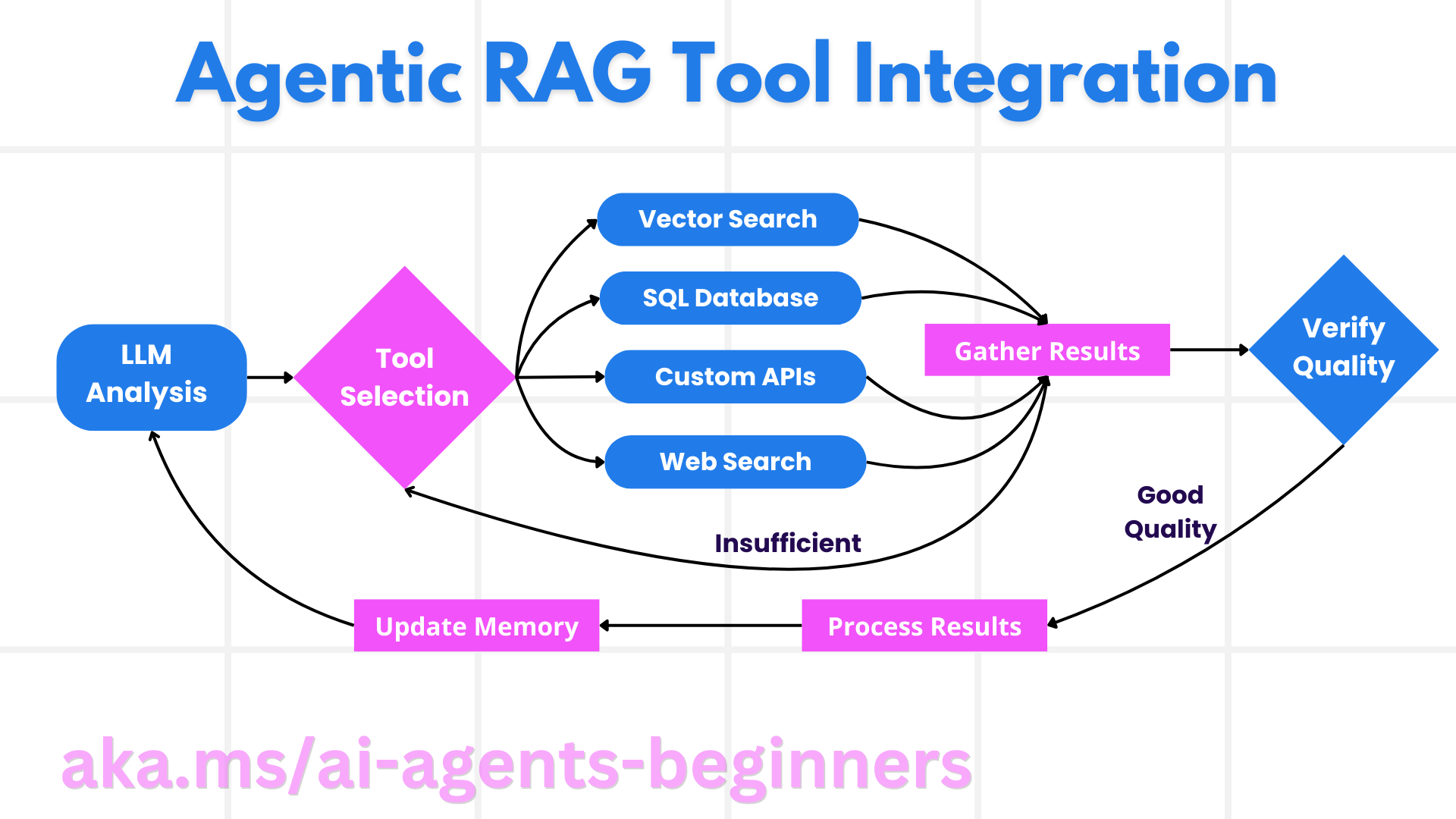

An agentic system relies on a looped interaction pattern:
智能体系统依赖于循环交互模式:
- Initial Call: The user’s goal (aka. user prompt) is presented to the LLM.
初始调用:向 LLM 呈现用户的目标(即用户提示)。
- Tool Invocation: If the model identifies missing information or ambiguous instructions, it selects a tool or retrieval method—like a vector database query (e.g. Azure AI Search Hybrid search over private data) or a structured SQL call—to gather more context.
工具调用:如果模型发现信息缺失或指令模糊,它会选择一种工具或检索方法——例如向量数据库查询(例如 Azure AI Search 针对私有数据的混合搜索)或结构化 SQL 调用——以收集更多上下文。
- Assessment & Refinement: After reviewing the returned data, the model decides whether the information suffices. If not, it refines the query, tries a different tool, or adjusts its approach.
评估与优化:在审查返回的数据后,模型决定信息是否足够。如果不够,它会优化查询、尝试不同的工具或调整其方法。
- Repeat Until Satisfied: This cycle continues until the model determines that it has enough clarity and evidence to deliver a final, well-reasoned response.
重复直至满意:此循环持续进行,直到模型确定已拥有足够的清晰度和证据,以提供最终、经过深思熟虑的响应。
- Memory & State: Because the system maintains state and memory across steps, it can recall previous attempts and their outcomes, avoiding repetitive loops and making more informed decisions as it proceeds.
记忆与状态:由于系统在步骤之间保持状态和记忆,它可以回想起之前的尝试及其结果,避免重复循环并在执行过程中做出更明智的决策。
Over time, this creates a sense of evolving understanding, enabling the model to navigate complex, multi-step tasks without requiring a human to constantly intervene or reshape the prompt.
随着时间的推移,这会产生一种不断发展的理解感,使模型能够导航复杂的多步骤任务,而无需人类不断干预或重塑提示。
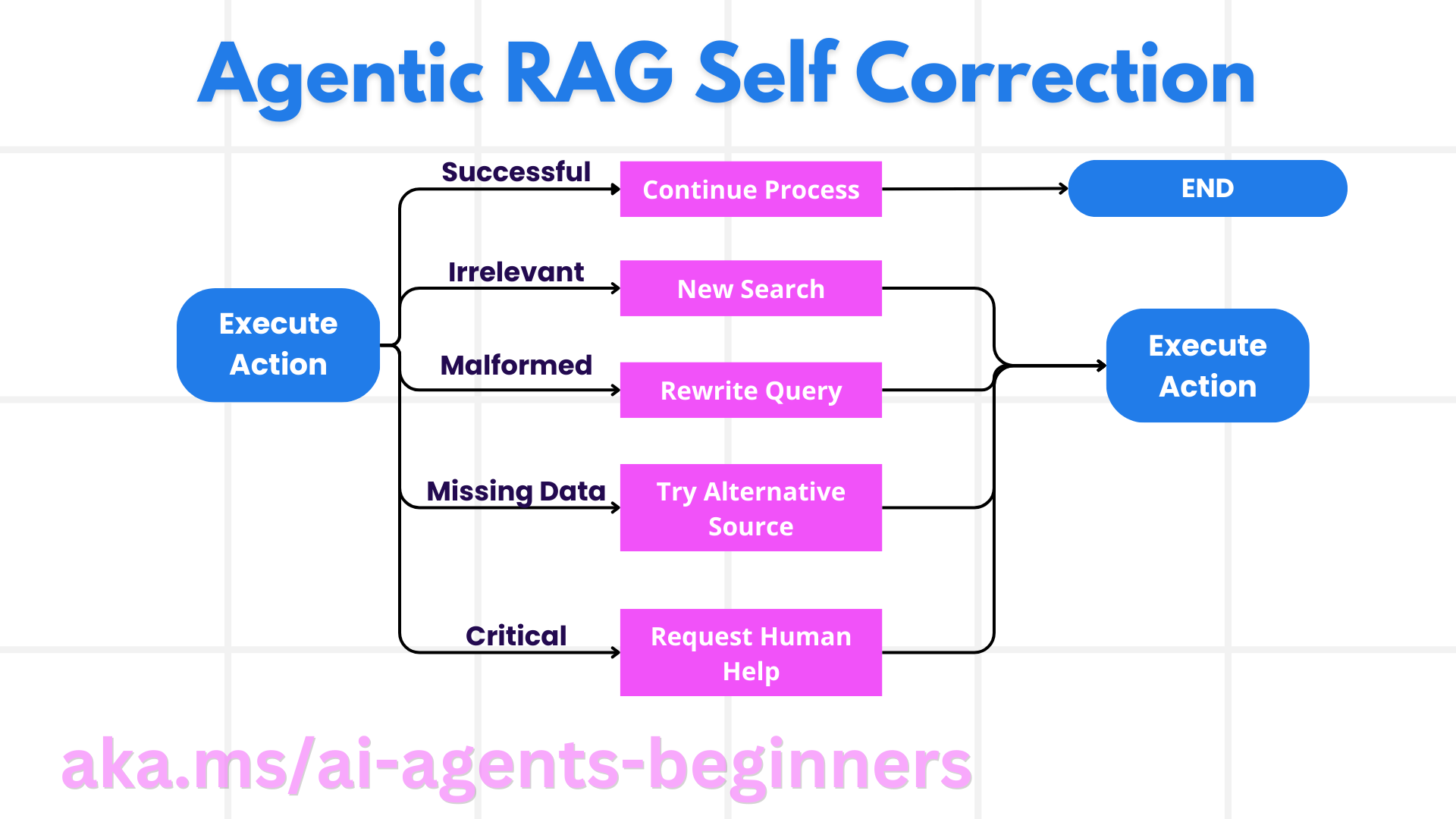
Agentic RAG’s autonomy also involves robust self-correction mechanisms. When the system hits dead ends—such as retrieving irrelevant documents or encountering malformed queries—it can:
Agentic RAG 的自主性还包括强大的自我纠错机制。当系统陷入僵局时——例如检索到无关文档或遇到格式错误的查询——它可以:
- Iterate and Re-Query: Instead of returning low-value responses, the model attempts new search strategies, rewrites database queries, or looks at alternative data sets.
迭代与重新查询:而不是返回低价值的响应,模型会尝试新的搜索策略、重写数据库查询或查看替代数据集。
- Use Diagnostic Tools: The system may invoke additional functions designed to help it debug its reasoning steps or confirm the correctness of retrieved data. Tools like Azure AI Tracing will be important to enable robust observability and monitoring.
使用诊断工具:系统可能会调用旨在帮助其调试推理步骤或确认检索数据正确性的附加功能。像 Azure AI Tracing 这样的工具对于实现强大的可观察性和监控非常重要。
- Fallback on Human Oversight: For high-stakes or repeatedly failing scenarios, the model might flag uncertainty and request human guidance. Once the human provides corrective feedback, the model can incorporate that lesson going forward.
退回到人工监督:对于高风险或反复失败的场景,模型可能会标记不确定性并请求人工指导。一旦人工提供了纠正性反馈,模型就可以在未来的操作中吸取这一教训。
This iterative and dynamic approach allows the model to improve continuously, ensuring that it’s not just a one-shot system but one that learns from its missteps during a given session.
这种迭代和动态的方法允许模型持续改进,确保它不仅仅是一个一次性系统,而是一个在给定会话期间能从错误中学习的系统。

Despite its autonomy within a task, Agentic RAG is not analogous to Artificial General Intelligence. Its “agentic” capabilities are confined to the tools, data sources, and policies provided by human developers. It can’t invent its own tools or step outside the domain boundaries that have been set. Rather, it excels at dynamically orchestrating the resources at hand. Key differences from more advanced AI forms include:
尽管 Agentic RAG 在任务内部具有自主性,但它并不等同于通用人工智能(AGI)。其“智能体”能力仅限于人类开发者提供的工具、数据源和策略。它无法发明自己的工具或跨出设定的领域边界。相反,它擅长动态编排手头的资源。其与更高级 AI 形式的主要区别包括:
- Domain-Specific Autonomy: Agentic RAG systems are focused on achieving user-defined goals within a known domain, employing strategies like query rewriting or tool selection to improve outcomes.
特定领域的自主性:Agentic RAG 系统专注于在已知领域内实现用户定义的目标,采用查询重写或工具选择等策略来改善结果。
- Infrastructure-Dependent: The system’s capabilities hinge on the tools and data integrated by developers. It can’t surpass these boundaries without human intervention.
依赖基础设施:系统的功能取决于开发者集成的工具和数据。没有人工干预,它无法超越这些边界。
- Respect for Guardrails: Ethical guidelines, compliance rules, and business policies remain very important. The agent’s Agent 智能体 freedom is always constrained by safety measures and oversight mechanisms (hopefully?)
遵守安全限制:道德准则、合规规则和业务策略仍然非常重要。智能体的自由始终受到安全措施和监督机制的约束(希望如此?)。
Agentic RAG shines in scenarios requiring iterative refinement and precision:
Agentic RAG 在需要迭代优化和精确度的场景中大放异彩:
- Correctness-First Environments: In compliance checks, regulatory analysis, or legal research, the agentic model can repeatedly verify facts, consult multiple sources, and rewrite queries until it produces a thoroughly vetted answer.
以准确性为首要目标的环境:在合规性检查、监管分析或法律研究中,智能体模型可以反复验证事实、咨询多个来源,并重写查询,直至产生经过彻底审查的答案。
- Complex Database Interactions: When dealing with structured data where queries might often fail or need adjustment, the system can autonomously refine its queries using Azure SQL or Microsoft Fabric OneLake, ensuring the final retrieval aligns with the user’s intent.
复杂的数据库交互:在处理结构化数据时,查询可能会经常失败或需要调整。系统可以使用 Azure SQL 或 Microsoft Fabric OneLake 自主优化其查询,确保最终检索符合用户的意图。
- Extended Workflows: Longer-running sessions might evolve as new information surfaces. Agentic RAG can continuously incorporate new data, shifting strategies as it learns more about the problem space.
延伸的工作流程:随着新信息的出现,较长的运行会话可能会不断演变。Agentic RAG 可以持续整合新数据,在了解有关问题空间的更多信息时调整策略。
As these systems become more autonomous in their reasoning, governance and transparency are crucial:
随着这些系统在推理方面变得更加自主,治理和透明度变得至关重要:
- Explainable Reasoning: The model can provide an audit trail of the queries it made, the sources it consulted, and the reasoning steps it took to reach its conclusion. Tools like Azure AI Content Safety and Azure AI Tracing / GenAIOps can help maintain transparency and mitigate risks.
可解释的推理:模型可以提供其执行的查询、参考的来源以及为得出结论所采取的推理步骤的审计追踪。像 Azure AI Content Safety 和 Azure AI Tracing / GenAIOps 这样的工具可以帮助保持透明度并降低风险。
- Bias Control and Balanced Retrieval: Developers can tune retrieval strategies to ensure balanced, representative data sources are considered, and regularly audit outputs to detect bias or skewed patterns using custom models for advanced data science organizations using Azure Machine Learning.
偏差控制与平衡检索:开发者可以调整检索策略,以确保考虑平衡且具有代表性的数据源,并使用 Azure Machine Learning 中的自定义模型定期审核输出,以检测偏差或倾斜模式。
- Human Oversight and Compliance: For sensitive tasks, human review remains essential. Agentic RAG doesn’t replace human judgment in high-stakes decisions—it augments it by delivering more thoroughly vetted options.
人工监督与合规性:对于敏感任务,人工审查仍然至关重要。在高风险决策中,Agentic RAG 并不会取代人类的判断,而是通过提供经过更彻底审查的选项来增强其判断力。
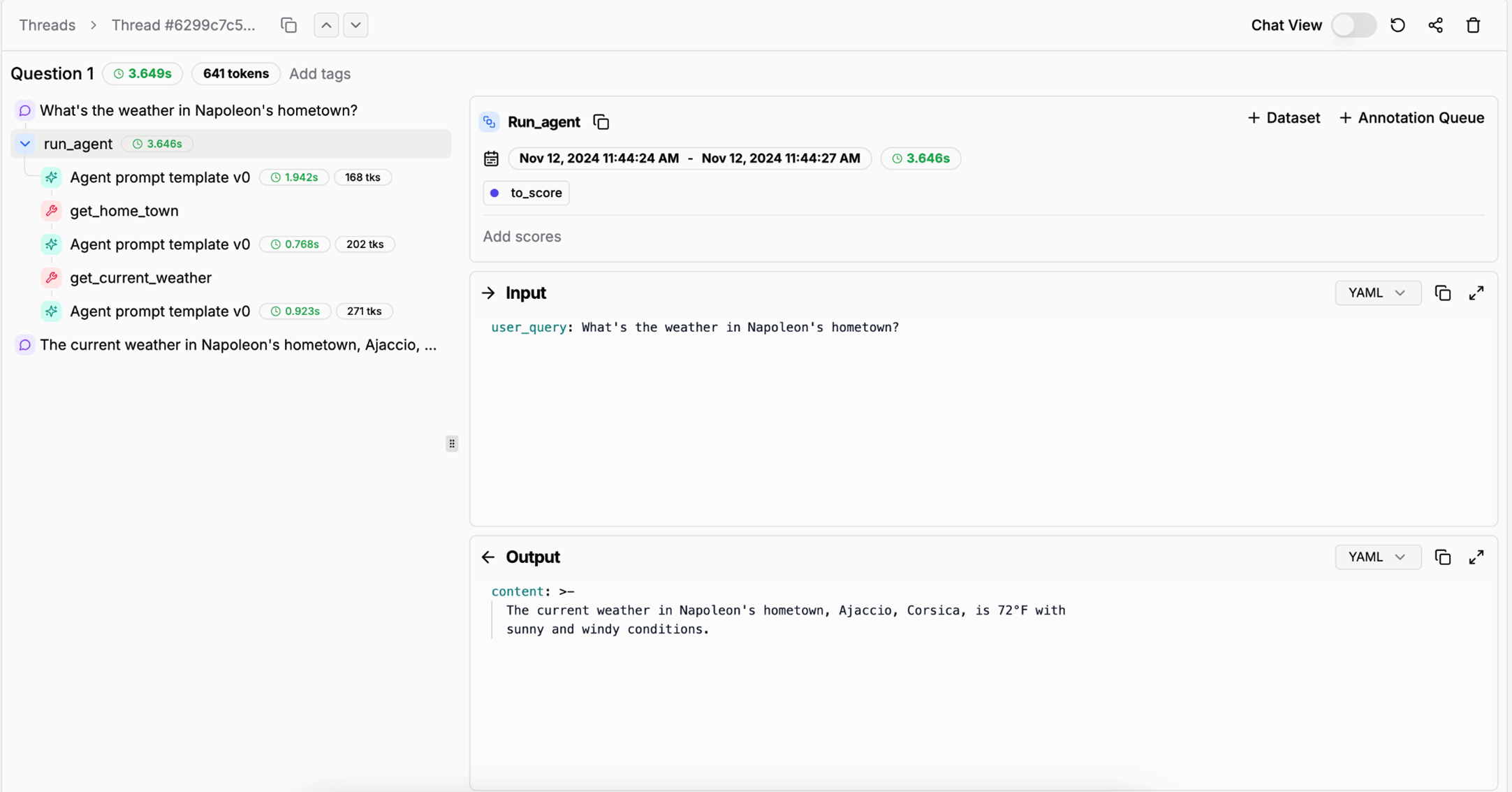
Having tools that provide a clear record of actions is essential. Without them, debugging a multi-step process can be very difficult. See the following example from Literal AI (company behind Chainlit) for an Agent run:
拥有提供清晰操作记录的工具至关重要。没有它们,调试一个多步骤过程会非常困难。请参阅以下来自 Literal AI(Chainlit 背后的公司)的智能体运行示例:

Agentic RAG represents a natural evolution in how AI systems handle complex, data-intensive tasks. By adopting a looped interaction pattern, autonomously selecting tools, and refining queries until achieving a high-quality result, the system moves beyond static prompt-following into a more adaptive, context-aware decision-maker. While still bounded by human-defined infrastructures and ethical guidelines, these agentic capabilities enable richer, more dynamic, and ultimately more useful AI interactions for both enterprises and end-users.
Agentic RAG 代表了 AI 系统处理复杂、数据密集型任务方式的自然演进。通过采用循环交互模式、自主选择工具以及优化查询直至获得高质量结果,系统超越了静态的遵循提示,转变为更具适应性、上下文感知能力的决策者。虽然仍受限于人类定义的基础设施和道德准则,但这些智能体能力为企业和最终用户实现了更丰富、更动态且最终更有用的 AI 交互。
发布者:全栈程序员-站长,转载请注明出处:https://javaforall.net/244478.html原文链接:https://javaforall.net




