
- 疯狂创客圈 经典图书 : 《Netty Zookeeper Redis 高并发实战》 面试必备 + 面试必备 + 面试必备 【博客园总入口 】
- 疯狂创客圈 经典图书 : 《SpringCloud、Nginx高并发核心编程》 大厂必备 + 大厂必备 + 大厂必备 【博客园总入口 】
- 入大厂+涨工资必备: 高并发【 亿级流量IM实战】 实战系列 【 SpringCloud Nginx秒杀】 实战系列 【博客园总入口 】
JUC 高并发工具类(3文章)与高并发容器类(N文章) :
- 1 CyclicBarrier 使用&核心原理 图解
- 2 countDownLatch 使用&核心原理 图解
- 3 Semaphore 使用&核心原理 图解
- 4 跳表 核心原理 图解
- 5 ConcurrentSkipListMap – 秒懂
- 6 ConcurrentSkipListSet – 秒懂
说明:阅读本文之前,请先掌握本文前置知识: 跳表 核心原理 图解。
ConcurrentSkipListMap 的结构
1 ConcurrentSkipListMap2结构
下面是Node, Index, HeadIndex 的介绍
11 普通结点Node
/ * 最上层链表的头指针head */ private transient volatile HeadIndex

     head; /* ---------------- 普通结点Node定义 -------------- */ static final class Node

      { final K key; volatile Object value; volatile Node

       next; // ... }
1.2 索引结点Index
 /* ---------------- 索引结点Index定义 -------------- */ static class Index

     { final Node

      node; // node指向最底层链表的Node结点 final Index

       down; // down指向下层Index结点 volatile Index

        right; // right指向右边的Index结点 // ... }
1.3 头索引结点HeadIndex
 /* ---------------- 头索引结点HeadIndex -------------- */ static final class HeadIndex

     extends Index

      { final int level; // 层级 // ... } }
1.1.4 ConcurrentSkipListMap2内部类与成员汇总
public class ConcurrentSkipListMap2

     extends AbstractMap

      implements ConcurrentNavigableMap

       , Cloneable, Serializable { / * 最底层链表的头指针BASE_HEADER */ private static final Object BASE_HEADER = new Object(); / * 最上层链表的头指针head */ private transient volatile HeadIndex

        head; /* ---------------- 普通结点Node定义 -------------- */ static final class Node

         { final K key; volatile Object value; volatile Node

          next; // ... } /* ---------------- 索引结点Index定义 -------------- */ static class Index

           { final Node

            node; // node指向最底层链表的Node结点 final Index

             down; // down指向下层Index结点 volatile Index

              right; // right指向右边的Index结点 // ... } / *Nodes heading each level keep track of their level. */ /* ---------------- 头索引结点HeadIndex -------------- */ static final class HeadIndex

               extends Index

                { final int level; // 层级 static final class HeadIndex

                 extends Index

                  { final int level; HeadIndex(Node

                   node, Index

                    down, Index

                     right, int level) { super(node, down, right); this.level = level; } // ... }
3 ConcurrentSkipListMap 的几个特点:
- ConcurrentSkipListMap 的节点主要由 Node, Index, HeadIndex 构成;
- ConcurrentSkipListMap 的数据结构横向纵向都是链表
- 最下面那层是Node层(数据节点)层, 上面几层都是Index(索引)层
- 从纵向链表来看, 最左边的是 HeadIndex 层, 右边的都是Index 层, 且每层的最底端都是对应Node, 纵向上的索引都是指向最底端的Node
4 ConcurrentSkipListMap在新建时的初始状态
ConcurrentSkipListMap在初始时, 只存在 HeadIndex 和 Base_Header 节点,初始状态如下:
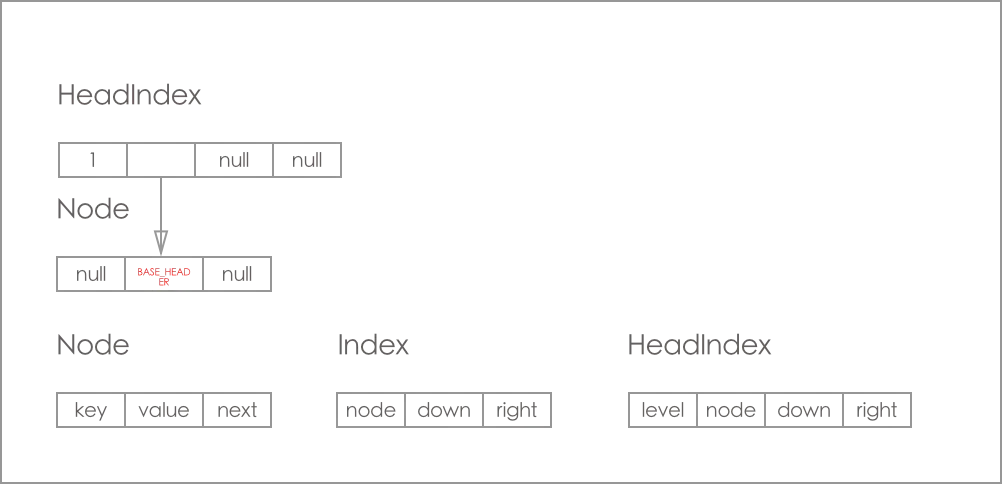

下面来看看 ConcurrentSkipListMap 的主要方法 doPut, doGet, doRemove方法的原理。
5 doPut 原理
put方法主要经历了2个步骤:
第一大步:在底层查找合适的位置,插入该节点的Node实例。
第二大步:插入该节点的一个或者多个IndexNode节点(数量和层数有关)。
5.1 第一大步:查找合适的位置,插入该Node节点。具体如下:
step1)查找前驱跳跃点b,并且获取b.next节点为 n。
step2)遍历查找合适的插入点,n 为null就创建节点,添加在前驱b的next节点,添加成功跳出第一步,失败重新进行step1
step3)n不为null,则n为其应该插入的节点。明确了位置之后,先要判断n是否还是b的next节点,防止被抢先在中间插入了,再判断n节点是否是有效节点,如n被逻辑删除了就回到step1后再重来。最后判断b节点是否被删除了。接下来,判断node的key的是否大小n节点的key,如果等于就替换掉该节点的value值(表示更新value),跳出第一步。如果大于意味着还要往n后找,最后找到了合适的插入点就尝试插入,如果失败重来step1,成功结束第一步。
完成第一步大部,仅仅是将节点插入了链表中,还需要完成跳表的IndexNode构成。
5.1 第二大步:构建跳跃表的结点,调整跳表。
step1) 随机级别,偶数且大于0。
说明:node级别就意味着跳表的间隔,node级别越大,层次越高,高级别层次的结点越少,key间隔越大。级别越大,在查找的时候可以提升查找速度,从最大的级别开始,逐级定位结点。一个新加结点,首先要确定其属于几级,1级就不需要构建IndexNode,一系列判断出其所属级别后,就先构建down方向的一系列结点,再通过各层的头结点,将整个层的IndexNode的right方向结点联通。
step2)如果该级别的 level 是0(要知道获得0的概率是很大的),不需要插入Index索引结点。插入的工作结束。
step2) 如果该级别的 level<= max(head的级别,当前的最大level),生成一系列的Index索引节点,并且通过down成员进行串接,所有级别Index索引结点(node为插入节点)构成down链,生成的Index索引节点从级别1开始。
step3)如果该级别的 level> max(head的级别,当前的最大level) (这个函数返回的最大值也就31, 也就是说, 最多有31层的索引),则加大一个跳表级别,生成从1开始的所有级别Index索引结点(node为插入节点)构成down链。
step4)再次判断头结点级别,如果head级别比该级别高,证明head被其他线程抢先调整了,重来。没有抢先,重新构建head头结点的索引headIndex,node是头结点的node,补充缺失的级别就可以了。替换头结点HeadIndex成功跳出循环,失败重来。
上面都是构建down方向的结点,确保head的down方向包含了所有索引级别。后面的方法就是构建right方法的连接了。这里要注意,h变成了新的头结点,level却是旧的级别。
step5)h结点或h的right结点r为null,没必要进行,结束该环节
step6)r不为null,比较key和r的结点n的key,n结点被逻辑删除,就帮助其移除,移除后找下一个r结点。当前r结点要小于key,则key还在右边,继续找r。直到找到key应该在的位置,即r结点>=key,key的right就是r。
step7)不断降级,直到找到当前的插入级别,直到到指定级别,构建连接,连接失败重来,成功如果构建的结点被逻辑删除了,通过findNode方法,删除它。
6 图解: put的完成过程
6.1 添加第1个节点
步骤如下:
- 1 doPut()寻找前驱节点, 这时返回的 b = BaseHeader, n = null
- 2 doPut直接 CAS操作设置b 的next节点
- 3 这里假设获取的 level 是0(要知道获得0的概率是很大的, 这个函数返回的最大值也就31, 也就是说, 最多有31层的索引)
- 4 所以这时 index索引节点= null, 操作结束
6.2 添加第2个节点
再次添加 key=2, value = B 节点, 最终效果图如下:
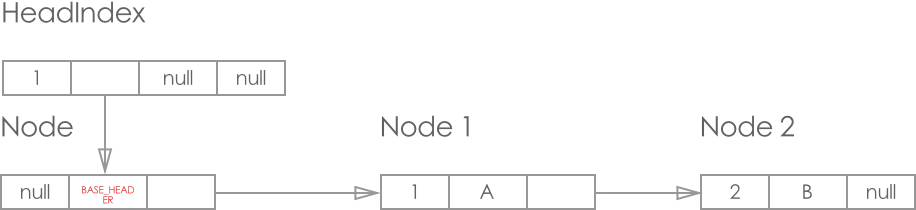
6.3 添加第3个节点
这里为了理解上的便利, 我们再添加一个节点, 最终效果图如下:

步骤如下:
- 1 doPut()寻找前驱节点, 这时返回的 b = node2, n = null
- 2 doPut直接 CAS操作设置b 的next节点为新的node3
- 3 这里假设获取的 level 是1, 则 level <= max(max = 1)成立, 初始化一个 index索引节点
- 4 最终找到要插入index位置, 然后进行down链接操作, 所以这时 index索引节点的down= null, 操作结束
这次增加了索引层 index 1
6.4 添加第4个节点
再put节点 key=4 value = D (情形和 Node1, Node2 一样), 最终结果:
[外链图片转存失败,源站可能有防盗链机制,建议将图片保存下来直接上传(img-Am5hoyuI-1604491989652)(file:///C:/Users/WUQING~1/AppData/Local/Temp/msohtmlclip1/01/clip_image006.png)]
6.5 添加第5个节点
添加 key=5, value = E 节点, 结果如图:
[外链图片转存失败,源站可能有防盗链机制,建议将图片保存下来直接上传(img-iIncHfVK-1604491989653)(file:///C:/Users/WUQING~1/AppData/Local/Temp/msohtmlclip1/01/clip_image007.png)]
步骤如下:
- 1 doPut()寻找前驱节点, 这时返回的 b = node4, n = null
- 2 doPut直接 CAS操作设置b 的next节点为新的node5
- 3 这里假设获取的 level 是2, 则 level <= max(max = 1)不成立, 只要 level > max, 只是在原来的 max + 1, 就是指增加一层的索引
- 4 进行 index 索引链表的初始化, 一共两个index 节点,1层一个,index链表是纵向的链表
- 5 增加一个层次,在原来的 HeadIndex 的纵向链表上增加一个新节点,新的HeadIndex的 down= 老的HeadIndex,纵向连接起来, 而新HeadIndex的index是第二层的 Index,HadeIndex与Index横向连接起来了
这次增加了索引层 index 1
7 put的源码
/ * Main insetion method. Adds element if not present, or * replaces value if present and onlyIfAbsent is false. * * @param key the key * @param value the values that must be associated with key * @param onlyIfAbstsent if should not insert if already present * @return the old value, or null if newly inserted */ private V doPut(K key, V value, boolean onlyIfAbstsent){ Node

     z; // adde node if(key == null){ throw new NullPointerException(); } Comparator
     cmp = comparator; outer: for(;;){ // 0. for(Node

      b = findPredecessor(key, cmp), n = b.next;;){ // 1. 将 key 对应的前继节点找到, b 为前继节点, n是前继节点的next, 若没发生 条件竞争, 最终 key在 b 与 n 之间 (找到的b在 base_level 上) if(n != null){ // 2. n = null时 b 是链表的最后一个节点, key 直接插到 b 之后 (调用 b.casNext(n, z)) Object v; int c; Node

       f = n.next; // 3 获取 n 的右节点 if(n != b.next){ // 4. 条件竞争(另外一个线程在b之后插入节点, 或直接删除节点n), 则 break 到位置 0, 重新 break ; } if((v = n.value) == null){ // 4. 若 节点n已经删除, 则 调用 helpDelete 进行帮助删除 (详情见 helpDelete), 则 break 到位置 0, 重新来 n.helpDelete(b, f); break ; } if(b.value == null || v == n){ // 5. 节点b被删除中 ,则 break 到位置 0, 调用 findPredecessor 帮助删除 index 层的数据, 至于 node 层的数据 会通过 helpDelete 方法进行删除 break ; } if((c = cpr(cmp, key, n.key)) > 0){ // 6. 若 key 真的 > n.key (在调用 findPredecessor 时是成立的), 则进行 向后走 b = n; n = f; continue ; } if(c == 0){ // 7. 直接进行赋值 if(onlyIfAbstsent || n.casValue(v, value)){ V vv = (V) v; return vv; } break ; // 8. cas 竞争条件失败 重来 } // else c < 0; fall through } // 9. 到这边时 n.key > key > b.key z = new Node

        (key, value, n); if(!b.casNext(n, z)){ break ; // 10. cas竞争条件失败 重来 } break outer; // 11. 注意 这里 break outer 后, 上面的 for循环不会再执行, 而后执行下面的代码, 这里是break 不是 continue outer, 这两者的效果是不一样的 } } int rnd = KThreadLocalRandom.nextSecondarySeed(); if((rnd & 0x) == 0){ // 12. 判断是否需要添加level int level = 1, max; while(((rnd >>>= 1) & 1) != 0){ ++level; } // 13. 上面这段代码是获取 level 的, 我们这里只需要知道获取 level 就可以 (50%的几率返回0,25%的几率返回1,12.5%的几率返回2...最大返回31。) Index

         idx = null; HeadIndex

          h = head; if(level <= (max = h.level)){ // 14. 初始化 max 的值, 若 level 小于 max , 则进入这段代码 (level 是 1-31 之间的随机数) for(int i = 1; i <= level; ++i){ idx = new Index

           (z, idx, null); // 15 添加 z 对应的 index 数据, 并将它们组成一个上下的链表(index层是上下左右都是链表) } } else{ // 16. 若 level > max 则只增加一层 index 索引层 level = max + 1; // 17. 跳表新的 level 产生 Index

            [] idxs = (Index

             [])new Index
            [level + 1]; for(int i = 1; i <= level; ++i){ idxs[i] = idx = new Index

              (z, idx, null); } for(;;){ h = head; int oldLevel = h.level; // 18. 获取老的 level 层 if(level <= oldLevel){ // 19. 另外的线程进行了index 层增加操作, 所以 不需要增加 HeadIndex 层数 break; } HeadIndex

               newh = h; Node

                oldbase = h.node; // 20. 这里的 oldbase 就是BASE_HEADER for(int j = oldLevel+1; j <= level; ++j){ // 21. 这里其实就是增加一层的 HeadIndex (level = max + 1) newh = new HeadIndex

                 (oldbase, newh, idxs[j], j); // 22. idxs[j] 就是上面的 idxs中的最高层的索引 } if(casHead(h, newh)){ // 23. 这只新的 headIndex h = newh; // 24. 这里的 h 变成了 new HeadIndex idx = idxs[level = oldLevel]; // 25. 这里的 idx 上从上往下第二层的 index 节点 level 也变成的 第二 break; } } } // find insertion points and splice in splice: for(int insertionLevel = level;;){ // 26. 这时的 level 已经是 第二高的 level(若上面 步骤19 条件竞争失败, 则多出的 index 层其实是无用的, 因为 那是 调用 Index.right 是找不到它的) int j = h.level; for(Index

                  q = h, r = q.right, t = idx;;){ // 27. 初始化对应的数据 if(q == null || t == null){ // 28. 节点都被删除 直接 break出去 break splice; } if(r != null){ Node

                   n = r.node; // compare before deletion check avoids needing recheck int c = cpr(cmp, key, n.key); if(n.value == null){ // 29. 老步骤, 帮助index 的删除 if(!q.unlink(r)){ break ; } r = q.right; // 30. 向右进行遍历 continue ; } if(c > 0){ // 31. 向右进行遍历 q = r; r = r.right; continue ; } } // 32. // 代码运行到这里, 说明 key < n.key // 第一次运行到这边时, j 是最新的 HeadIndex 的level j > insertionLevel 非常用可能, 而下面又有 --j, 所以终会到 j == insertionLevel if(j == insertionLevel){ if(!q.link(r, t)){ // 33. 将 index t 加到 q 与 r 中间, 若条件竞争失败的话就重试 break ; // restrt } if(t.node.value == null){ // 34. 若这时 node 被删除, 则开始通过 findPredecessor 清理 index 层, findNode 清理 node 层, 之后直接 break 出去, doPut调用结束 findNode(key); break splice; } if(--insertionLevel == 0){ // 35. index 层添加OK, --1 为下层插入 index 做准备 break splice; } } / * 下面这行代码其实是最重要的, 理解这行代码, 那 doPut 就差不多了 * 1). --j 要知道 j 是 newhead 的level, 一开始一定 > insertionLevel的, 通过 --1 来为下层操作做准备 (j 是 headIndex 的level) * 2). 通过 19. 21, 22 步骤, 个人认为 --j >= insertionLevel 是横成立, 而 --j 是必须要做的 * 3) j 经过几次--1, 当出现 j < level 时说明 (j+1) 层的 index已经添加成功, 所以处理下层的 index */ if(--j >= insertionLevel && j < level){ t = t.down; } / 到这里时, 其实有两种情况 * 1) 还没有一次index 层的数据插入 * 2) 已经进行 index 层的数据插入, 现在为下一层的插入做准备 */ q = q.down; // 从 index 层向下进行查找 r = q.right; } } } return null; }
8 findPredecessor() 寻找前继节点
总体思路是: 从矩形链表的左上角的 HeadIndex 索引开始, 先向右, 遇到 null, 或 > key 时向下, 重复向右向下找, 一直找到 对应的前继节点(前继节点就是小于 key 的最大节点)
 / * Returns a base-level node with key strictly less than given key, * or the base-level header if there is no such node. Also * unlinks indexes to deleted nodes found along the way. Callers * rely on this side-effect of clearing indices to deleted nodes * @param key the key * @return a predecessor of the key */ private Node

     findPredecessor(Object key, Comparator
     cmp){ if(key == null) throw new NullPointerException(); // don't postpone errors for(;;){ for(Index

      q = head, r = q.right, d;;){ // 1. 初始化数据 q 是head, r 是 最顶层 h 的右Index节点 if(r != null){ // 2. 对应的 r = null, 则进行向下查找 Node

       n = r.node; K k = n.key; if(n.value == null){ // 3. n.value = null 说明 节点n 正在删除的过程中 if(!q.unlink(r)){ // 4. 在 index 层直接删除 r 节点, 若条件竞争发生直接进行break 到步骤1 , 重新从 head 节点开始查找 break; // restart } r = q.right; //reread r // 5. 删除 节点r 成功, 获取新的 r 节点, 回到步骤 2 (还是从这层索引开始向右遍历, 直到 r == null) continue; } if(cpr(cmp, key, k) > 0){ // 6. 若 r.node.key < 参数key, 则继续向右遍历, continue 到 步骤 2处, 若 r.node.key > 参数key 直接跳到 步骤 7 q = r; r = r.right; continue; } } if((d = q.down) == null){ // 7. 到这边时, 已经到跳表的数据层, q.node < key < r的 或q.node < key 且 r == null; 所以直接返回 q.node return q.node; } q = d; // 8 未到数据层, 进行重新赋值向下走 (为什么向下走呢? 回过头看看 跳表, 原来 上层的index 一般都是比下层的 index 个数少的) r = d.right; } } }
9. doGet() 获取节点对应的值
整个过程:
- 寻找 key 的前继节点 b (这时b.next = null || b.next > key, 则说明不存key对应的 Node)
- 接着就判断 b, b.next 与 key之间的关系(其中有些 helpDelete操作)
/ * Gets value for key. Almost the same as findNode, but returns * the found value (to avoid retires during ret-reads) * * 这个 doGet 方法比较简单 * @param key the key * @return the value, or null if absent */ private V doGet(Object key){ if(key == null){ throw new NullPointerException(); } Comparator
    cmp = comparator; outer: for(;;){ for(Node

     b = findPredecessor(key, cmp), n = b.next;;){ // 1. 获取 key 的前继节点 b, 其实这时 n.key >= key Object v; int c; if(n == null){ // 2. n == null 说明 key 对应的 node 不存在 所以直接 return null break outer; } Node

      f = n.next; if(n != b.next){ // 3. 有另外的线程修改数据, 重新来 break ; } if((v = n.value) == null){ // 4. n 是被删除了的节点, 进行helpDelete 后重新再来 n.helpDelete(b, f); break ; } if(b.value == null || v == n){ // 5. b已经是删除了的节点, 则 break 后再来 break ; } if((c = cpr(cmp, key, n.key)) == 0){ // 6. 若 n.key = key 直接返回结果, 这里返回的结果有可能是 null V vv = (V) v; return vv; } if(c < 0){ // 7. c < 0说明不存在 key 的node 节点 break outer; } // 8. 运行到这一步时, 其实是 在调用 findPredecessor 后又有节点添加到 节点b的后面所致 b = n; n = f; } } return null; }
10. doRemove() 删除节点
- 寻找对应的节点
- 给节点的 value 至 null, node.value = null
- 将 node 有增加一个标记节点 (this.value = this 还记得哇, 不记得的直接看 node 类)
- 通过 CAS 直接将 K对应的Node和标记节点一同删除
/ * Main deletion method. Locates node, nulls value, appends a * deletion marker, unlinks predecessor, removes associated index * nodes, and possibly reduces head index level * * Index nodes are cleared out simply by calling findPredecessor. * which unlinks indexes to deleted nodes found along path to key, * which will include the indexes to this node. This is node * unconditionally. We can't check beforehand whether there are * indexes hadn't been inserted yet for this node during initial * search for it, and we'd like to ensure lack of garbage * retention, so must call to be sure * * @param key the key * @param value if non-null, the value that must be * associated with key * @return the node, or null if not found */ final V doRemove(Object key, Object value){ if(key == null){ throw new NullPointerException(); } Comparator
    cmp = comparator; outer: for(;;){ for(Node

     b = findPredecessor(key, cmp), n = b.next;;){ // 1. 获取对应的前继节点 b Object v; int c; if(n == null){ // 2. 节点 n 被删除 直接 return null 返回 , 因为理论上 b.key < key < n.key break outer; } Node

      f = n.next; if(n != b.next){ // 3. 有其他线程在 节点b 后增加数据, 重来 break ; } if((v = n.value) == null){ // 4. 节点 n 被删除, 调用 helpDelete 后重来 n.helpDelete(b, f); break ; } if(b.value == null || v == n){ // 5. 节点 b 删除, 重来 调用findPredecessor时会对 b节点对应的index进行清除, 而b借点吧本身会通过 helpDelete 来删除 break ; } if((c = cpr(cmp, key, n.key)) < 0){ // 6. 若n.key < key 则说明 key 对应的节点就不存在, 所以直接 return break outer; } if(c > 0){ // 7. c>0 出现在 有其他线程在本方法调用findPredecessor后又在b 后增加节点, 所以向后遍历 b = n; n = f; continue ; } if(value != null && !value.equals(v)){ // 8. 若 前面的条件为真, 则不进行删除 (调用 doRemove 时指定一定要满足 key value 都相同, 具体看 remove 方法) break outer; } if(!n.casValue(v, null)){ // 9. 进行数据的删除 break ; } if(!n.appendMarker(f) || !b.casNext(n, f)){ // 10. 进行 marker 节点的追加, 这里的第二个 cas 不一定会成功, 但没关系的 (第二个 cas 是删除 n节点, 不成功会有 helpDelete 进行删除) findNode(key); // 11. 对 key 对应的index 进行删除 } else{ findPredecessor(key, cmp); //12. 对 key 对应的index 进行删除 10进行操作失败后通过 findPredecessor 进行index 的删除 if(head.right == null){ tryReduceLevel(); // 13. 进行headIndex 对应的index 层的删除 } } V vv = (V) v; return vv; } } return null; }
11 无锁编程(lock free)
常见的无锁编程(lock free)一般是基于CAS(Compare And Swap)+volatile 结合实现:(1)CAS保障操作的原子性,volatile 保障内存的可见性。
- 优点:
1、开销较小:不需要进入内核,不需要切换线程;
2、没有死锁:总线锁最长持续为一次read+write的时间;
3、只有写操作需要使用CAS,读操作与串行代码完全相同,可实现读写不互斥。
- 缺点:
1、编程非常复杂,两行代码之间可能发生任何事,很多常识性的假设都不成立。
2、CAS模型覆盖的情况非常少,无法用CAS实现原子的复数操作。
12 无锁编程Key-Value结构的对比
目前常用的key-value数据结构有三种:Hash表、红黑树、SkipList,它们各自有着不同的优缺点(不考虑删除操作):
- Hash表:插入、查找最快,为O(1);如使用链表实现则可实现无锁;数据有序化需要显式的排序操作。
- 红黑树:插入、查找为O(logn),但常数项较小;无锁实现的复杂性很高,一般需要加锁;数据天然有序。
- SkipList:插入、查找为O(logn),但常数项比红黑树要大;底层结构为链表,可无锁实现;数据天然有序。
如果要实现一个key-value结构,需求的功能有插入、查找、迭代、修改,那么首先Hash表就不是很适合了,因为迭代的时间复杂度比较高;而红黑树的插入很可能会涉及多个结点的旋转、变色操作,因此需要在外层加锁,这无形中降低了它可能的并发度。而SkipList底层是用链表实现的,可以实现为lock free,同时它还有着不错的性能(单线程下只比红黑树略慢),非常适合用来实现我们需求的那种key-value结构。
所以,LevelDB、Redis的底层存储结构就是用的SkipList。
回到◀疯狂创客圈▶
疯狂创客圈 – Java高并发研习社群,为大家开启大厂之门
发布者:全栈程序员-站长,转载请注明出处:https://javaforall.net/204258.html原文链接:https://javaforall.net



