
Servlet–HttpServlet实现doGet和doPost请求的原理
更多原创性能测试文章关注
十年性能测试专家&7DGroup公众号


一、HttpServlet简介
1、HttpServlet是GenericServlet的子类,又是在GenericServlet的基础上做了增强。
2、HttpServlet方法
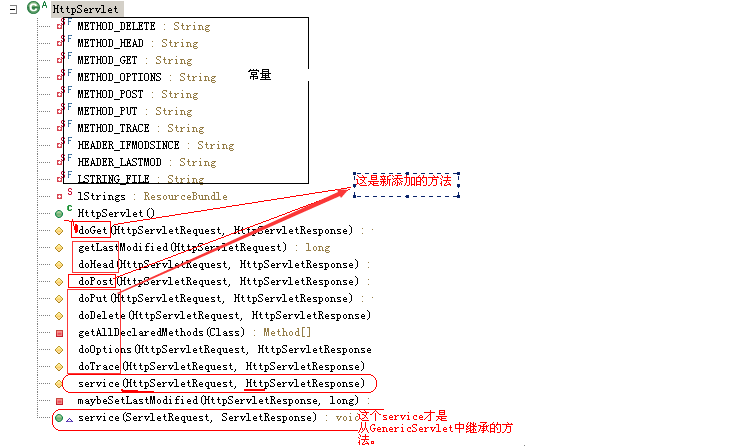
二、HTTP实现doGet或doPost请求项目介绍
1、通过实现doGet请求和doPost请求实例来了解内部的工作原理。
2、doGet请求和doPost请求实例代码介绍:
A:创建一个Servlet类继承HttpServlet类
B:在index.jsp页面创建一个超链接请求
3、doGet请求和doPost请求实例实施介绍:
A、创建一个webproject项目。
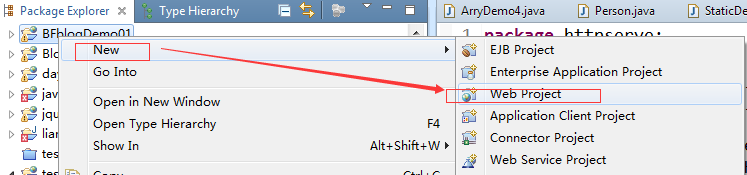
B、创建一个Servlet类的名称为HttpServ继承HttpServlet类同时覆写doGet方法和doPost方法。
1、
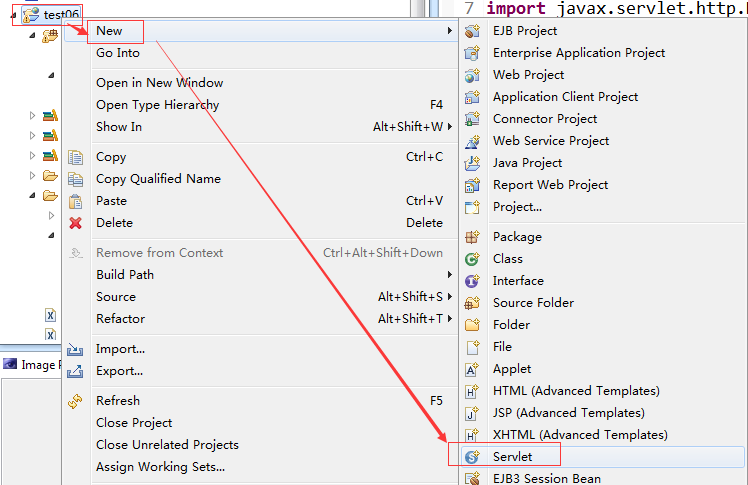
2、
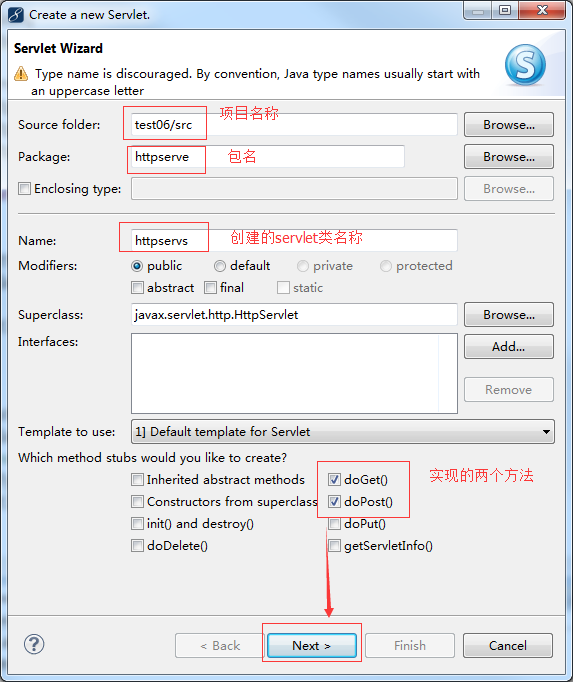
3、配置web.xml文件
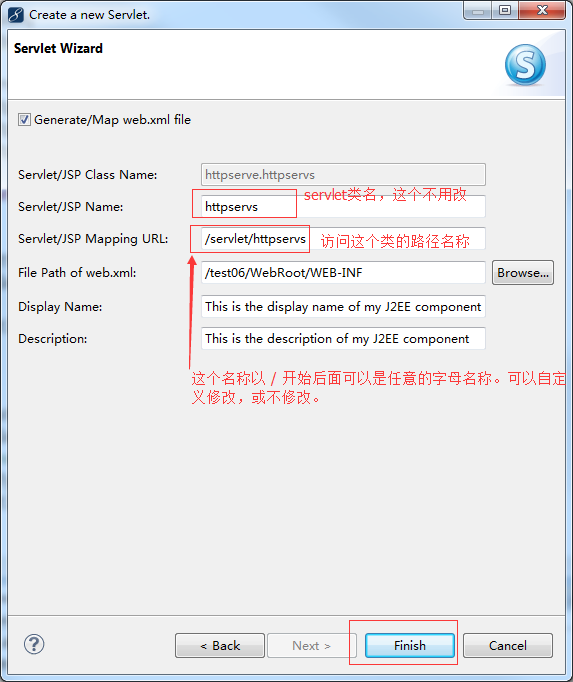
4、创建Servlet代码展示
package httpserve;

import java.io.IOException;
import java.io.PrintWriter;

import javax.servlet.ServletException;
import javax.servlet.http.HttpServlet;
import javax.servlet.http.HttpServletRequest;
import javax.servlet.http.HttpServletResponse;

public class HttpServ extends HttpServlet {


	public void doGet(HttpServletRequest request, HttpServletResponse response)
			throws ServletException, IOException {

		System.out.println("发送get请求。。。。。。。。。。。");

	}

	protected void doPost(HttpServletRequest req, HttpServletResponse resp)
			throws ServletException, IOException {
		// TODO Auto-generated method stub
		resp.setContentType("text/html;charset=UTF-8");
		System.out.println("发送post方法。。。。。。。。。。");
	}

}
5、web.xml配置文件代码展示
<?xml version="1.0" encoding="UTF-8"?>
<web-app version="3.0"
    xmlns="http://java.sun.com/xml/ns/javaee"
    xmlns:xsi="http://www.w3.org/2001/XMLSchema-instance"
    xsi:schemaLocation="http://java.sun.com/xml/ns/javaee http://java.sun.com/xml/ns/javaee/web-app_3_0.xsd">
  <servlet>
    <description>This is the description of my J2EE component</description>
    <display-name>This is the display name of my J2EE component</display-name>
    <servlet-name>HttpServ</servlet-name>
    <servlet-class>httpserve.HttpServ</servlet-class>
  </servlet>

  <servlet-mapping>
    <servlet-name>HttpServ</servlet-name>
    <url-pattern>/http</url-pattern>
  </servlet-mapping>

</web-app>
C、在index.jsp页面创建一个超链接请求
<%@ page language="java" import="java.util.*" pageEncoding="UTF-8"%>
<%
String path = request.getContextPath();
String basePath = request.getScheme()+"://"+request.getServerName()+":"+request.getServerPort()+path+"/";
%>

<!DOCTYPE HTML PUBLIC "-//W3C//DTD HTML 4.01 Transitional//EN">
<html>
  <head>
    <base href="<%=basePath%>">

    <title>My JSP 'index.jsp' starting page</title>
	<meta http-equiv="pragma" content="no-cache">
	<meta http-equiv="cache-control" content="no-cache">
	<meta http-equiv="expires" content="0">
	<meta http-equiv="keywords" content="keyword1,keyword2,keyword3">
	<meta http-equiv="description" content="This is my page">
	<!--
	<link rel="stylesheet" type="text/css" href="styles.css">
	-->
  </head>

  <body>
    This is my JSP page. <br>
    <a href="http://localhost:8080/test06/http">get请求1</a><br/>
    <!-- 对于一个html页面来说,如果没有以http开始,则默认的前面会加上
    	协议类型://目前这个页面所在的服务器:目前端口/目前项目/你给的这个名称 -->
    <a href="http">get请求2</a><hr/>
    <form method = "post" action="http">
    	<input type="submit" value="提交"/>
    </form>
  </body>
</html>
D、发送doGet请求和doPost请求
a、在浏览器中输入测试地址,http://127.0.0.1:8080/test06/
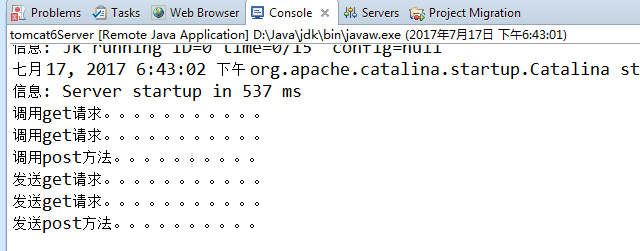
b、打开项目的首页后分别点击get请求1、get请求2、和 post请求(提交按钮)
c、在控制台可以观察到分别调用了doGet和doPost方法。
三、HTTP实现doGet或doPost请求原理介绍
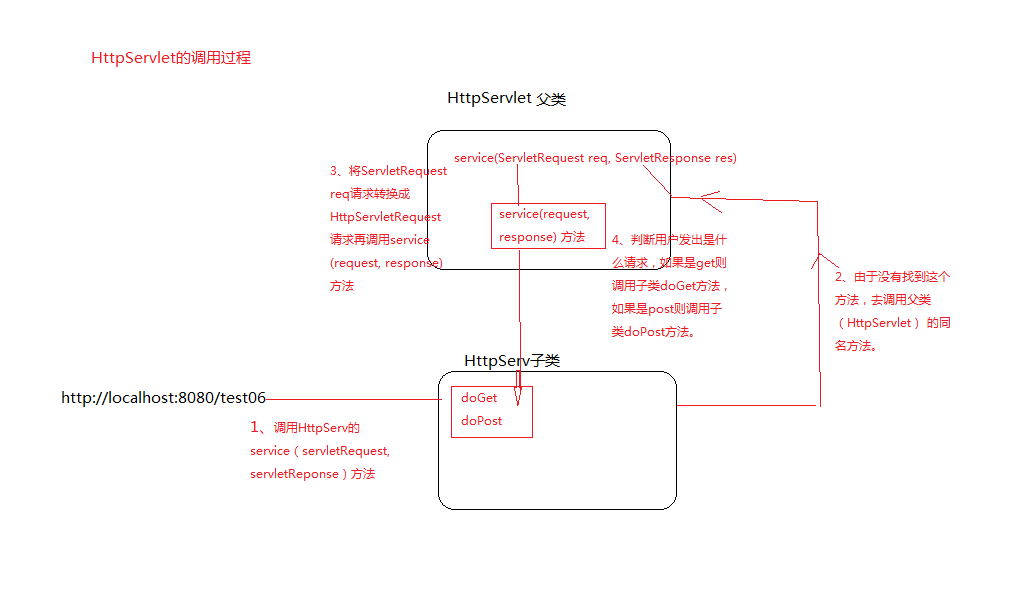
1、浏览器发送请求到HttpSevr类调用HttpServ的service(servletRequest, servletReponse)方法
2、由于没有找到这个方法,去调用父类(HttpServlet) 的同名方法。
3、父类的service方法将ServletRequest req请求转换成HttpServletRequest请求,再去调用service(request, response) 方法。
将ServletRequest req请求转换成HttpServletRequest请求再调用service(request, response) 方法源码如下:
 public void service(ServletRequest req, ServletResponse res)
        throws ServletException, IOException {

        HttpServletRequest  request;
        HttpServletResponse response;

        try {
            request = (HttpServletRequest) req;
            response = (HttpServletResponse) res;
        } catch (ClassCastException e) {
            throw new ServletException("non-HTTP request or response");
        }
        service(request, response);
    }
4、 调用的service(request, response) 方法功能是判断用户发出是什么请求,如果是get则调用子类(HttpSevr)的doGet方法,如果是post则调用子类(HttpSevr)的doPost方法。
service(request, response) 方法源码如下:
  protected void service(HttpServletRequest req, HttpServletResponse resp)
        throws ServletException, IOException {

        String method = req.getMethod();

        if (method.equals(METHOD_GET)) {
            long lastModified = getLastModified(req);
            if (lastModified == -1) {
                // servlet doesn't support if-modified-since, no reason
                // to go through further expensive logic
                doGet(req, resp);
            } else {
                long ifModifiedSince;
                try {
                    ifModifiedSince = req.getDateHeader(HEADER_IFMODSINCE);
                } catch (IllegalArgumentException iae) {
                    // Invalid date header - proceed as if none was set
                    ifModifiedSince = -1;
                }
                if (ifModifiedSince < (lastModified / 1000 * 1000)) {
                    // If the servlet mod time is later, call doGet()
                    // Round down to the nearest second for a proper compare
                    // A ifModifiedSince of -1 will always be less
                    maybeSetLastModified(resp, lastModified);
                    doGet(req, resp);
                } else {
                    resp.setStatus(HttpServletResponse.SC_NOT_MODIFIED);
                }
            }

        } else if (method.equals(METHOD_HEAD)) {
            long lastModified = getLastModified(req);
            maybeSetLastModified(resp, lastModified);
            doHead(req, resp);

        } else if (method.equals(METHOD_POST)) {
            doPost(req, resp);

        } else if (method.equals(METHOD_PUT)) {
            doPut(req, resp);

        } else if (method.equals(METHOD_DELETE)) {
            doDelete(req, resp);

        } else if (method.equals(METHOD_OPTIONS)) {
            doOptions(req,resp);

        } else if (method.equals(METHOD_TRACE)) {
            doTrace(req,resp);

        } else {
            //
            // Note that this means NO servlet supports whatever
            // method was requested, anywhere on this server.
            //

            String errMsg = lStrings.getString("http.method_not_implemented");
            Object[] errArgs = new Object[1];
            errArgs[0] = method;
            errMsg = MessageFormat.format(errMsg, errArgs);

            resp.sendError(HttpServletResponse.SC_NOT_IMPLEMENTED, errMsg);
        }
    }
5、调用关系图
四、注意事项:
1、如果在HttpServ中覆盖了service(ServletRequest,SerlvetResonse)方法则这个类的所实现的doGet/doPost都不会再执行了。
因为service(ServletRequest,SerlvetResonse)是最高接口Servlet定义规范。在tomcat调用时,一定会在最终的子类中去找这个方法且调用它。
如果最终的子类没有则会调用父的service(ServletRequest,SerlvetResonse)。
2、如果覆盖了serivce(HttpServletRequest,HtpServletResponse)则会执行httpServlet中的service(ServletRequest,SerlvetResonse),但是由于子类中已经覆盖了serivce(HttpServletRequest,HtpServletResponset)所以,httpServlet中的serivce(HttpServletRequest,HtpServletResponset)就不再执行了,而是直接执行子类中同名同参数方法,且doXxxx也不会执行了,因为子类的serivce(HttpServletRequest,HtpServletResponset)没有调用doXxxx.
3、如果继承了HttpServlet没有实现任何的doXxx方法则会抛出一个异常
发布者:全栈程序员-站长,转载请注明出处:https://javaforall.net/210104.html原文链接:https://javaforall.net